
The Art of Feeding
This summer in Saimaa lake, I saw something completely new: birds catching and eating crabs. The first was an Arctic Loon. It surfaced some distance away, suddenly appearing from beneath the water with something in its beak. At first, I could not see what it was. There was no time to move lower or change my position. With wildlife, trying to improve your position can easily mean losing the moment altogether. Sometimes it is better to photograph what is happening from where you are. I took several photographs. Only afterwards, looking at the images on my camera, did I see it clearly — a crab.
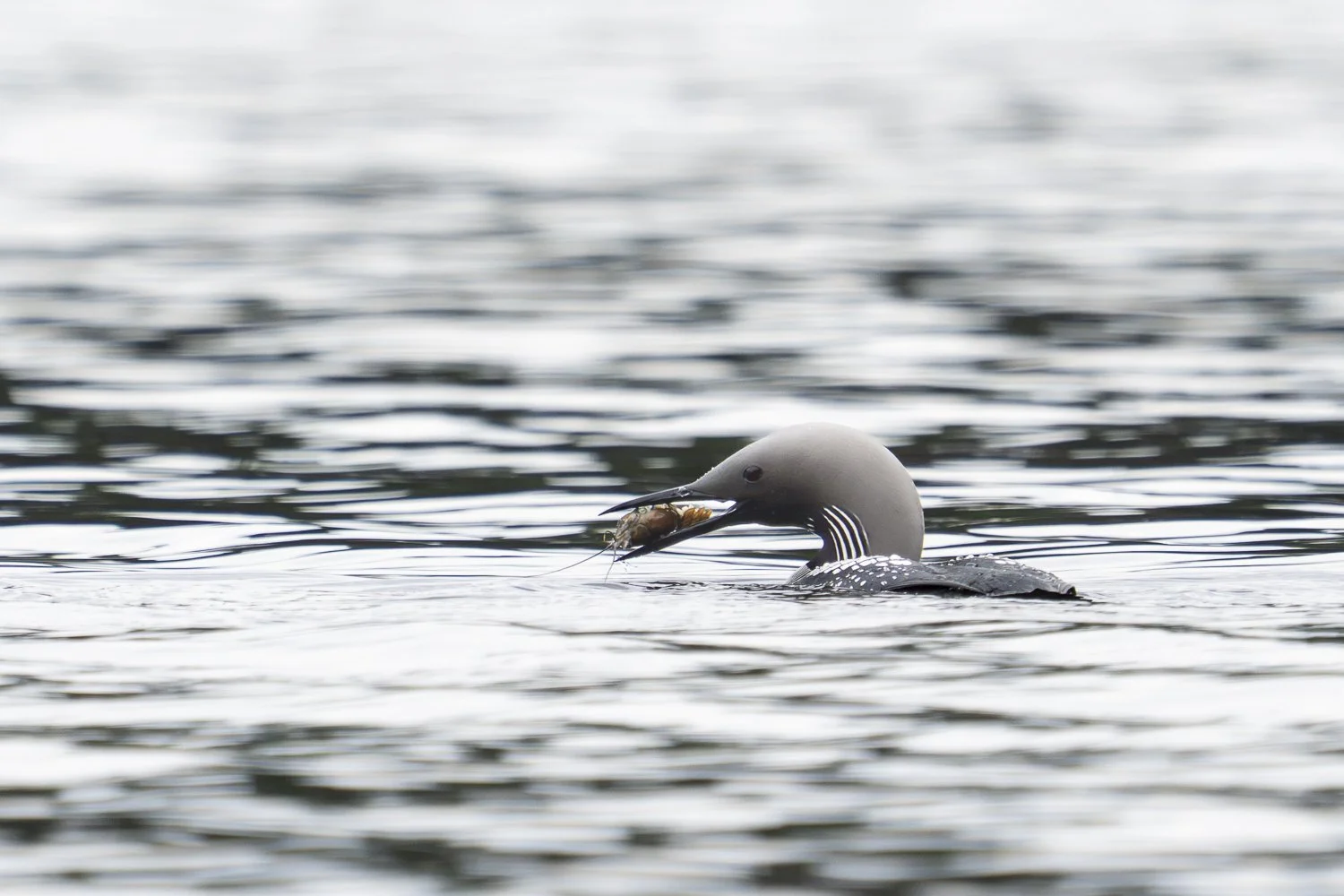
An unexpected catch — an Arctic Loon with a crab in its beak
A couple of weeks later, I had another unexpected encounter, this time with a Goosander. I was in a slightly different position, close to the shore, partly hidden behind some large rocks. The bird gradually swam closer and closer. It did not seem bothered by my presence; I hardly moved. Then it dived. I watched the water and waited for it to surface. A crab again. This time, close enough to see clearly. Until then, I had not even realised there were crabs living in the waters around me.
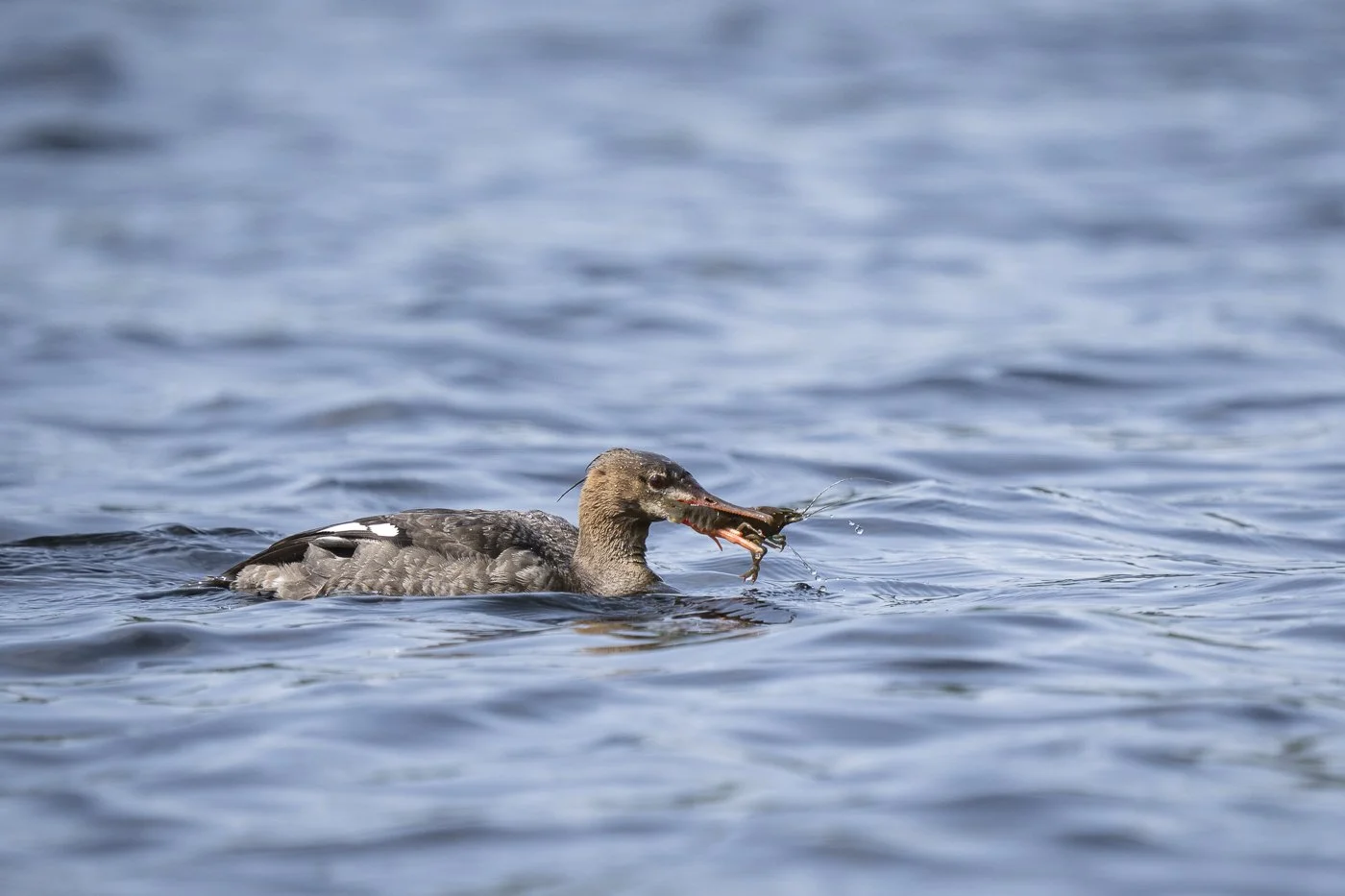
A Goosander with a crab — an unexpected discovery in Saimaa
At Siikalahti, the morning brought another kind of feeding behaviour. The Common Terns were busy carrying fish to their young, flying back and forth in the warm morning light. I also sawGreat Egretsthere for the first time. After observing their morning routines for some time, I watched one of them fly to a shallow water and settle there. It stood quietly, watching and waiting, until eventually it caught a fish. Such a small fish for such a large bird.
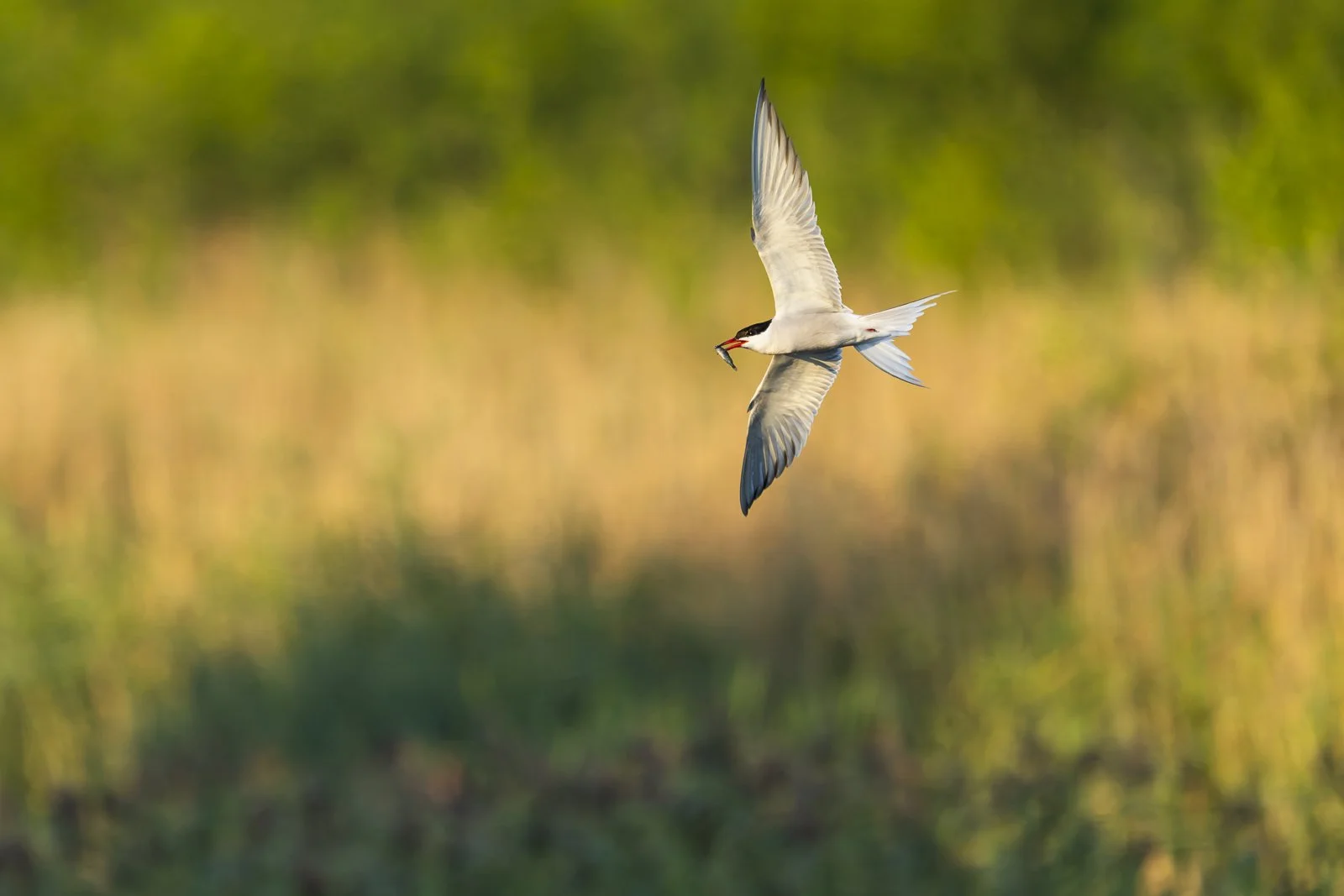
Back and forth, common tern carrying food to the young
These are the moments I look for in wildlife photography. Not only the photograph itself, but everything that comes before it. Where does the bird go? What is it looking at? Does it return to the same place? How does it behave when it is looking for food? The more you observe, the more familiar these small signs become. And gradually, observation becomes anticipation. You begin to sense that something is about to happen, even if you can never know exactly when.
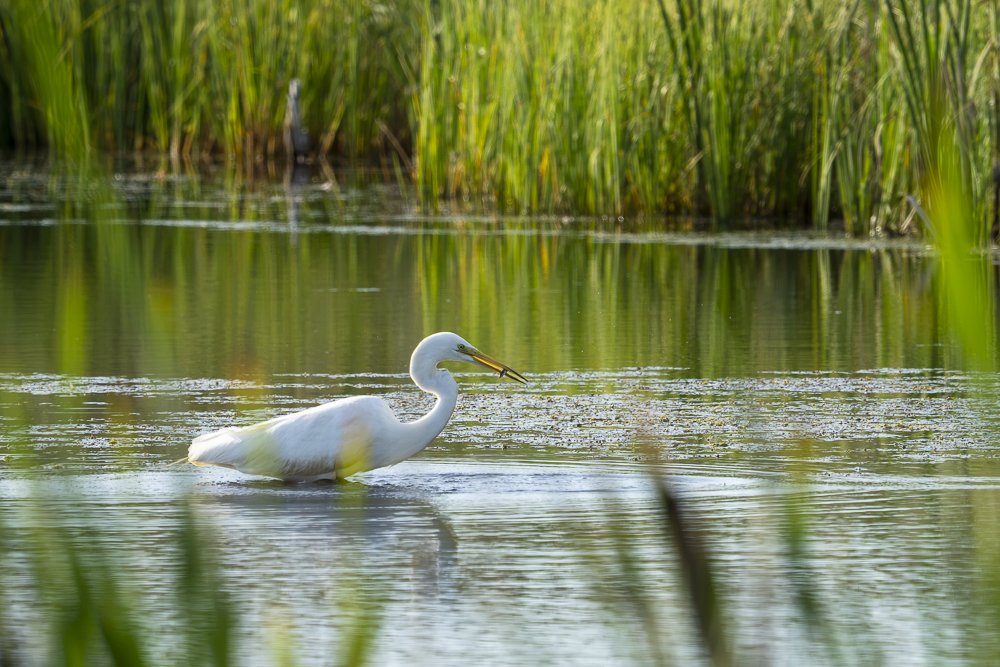
Such a small fish for such a large bird
Perhaps this is what makes photographing feeding behaviour so fascinating. A bird carrying a fish, a sudden dive, a crab appearing from beneath the surface, a flight back to the nest — these are brief moments, but they are part of a much larger story. The photograph captures only a fraction of it. To me, the real experience begins with observing: being still, paying attention, understanding the behaviour, and being ready when the moment finally comes. That, for me, is The Art of Feeding.