
I have been asked a few times how I prepare for journeys to the polar regions. After a number of expeditions and travels, some habits have simply become part of how I prepare. Most are small, but some were learned the hard way.
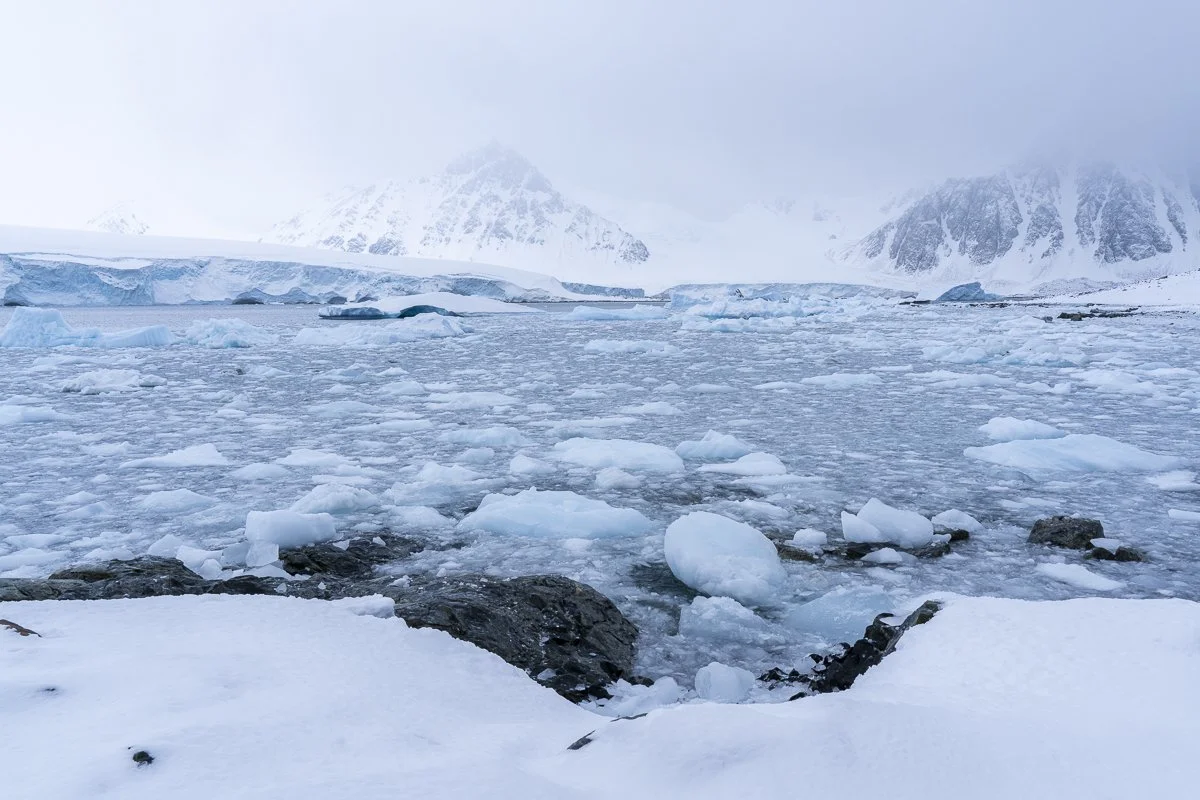
Antarctica in autumn, where ice, mountains and wind shape the landscape.
Understanding the Location
Preparation starts with understanding the place. Landscape, wildlife, season, weather, light and access all matter. Previous trips and friends are perhaps the best source of knowledge, but online research, books, maps and local information all have their place.
This becomes particularly important when travelling independently. In Lapland, for example, by the end of October many restaurants and cafés are closed, there may be snow, ice and reindeers on the roads, and conditions can change quickly. I once met a young traveller there one evening, with temperatures around −10°C. He had never been to the area, had not seen the location in daylight, was inadequately dressed and was still trying to find his way to a mountain lake two kilometres away using the light from his phone. Needless to say, that is dangerous. It was a useful reminder that knowing where you want to go is not the same as understanding the environment you are entering.
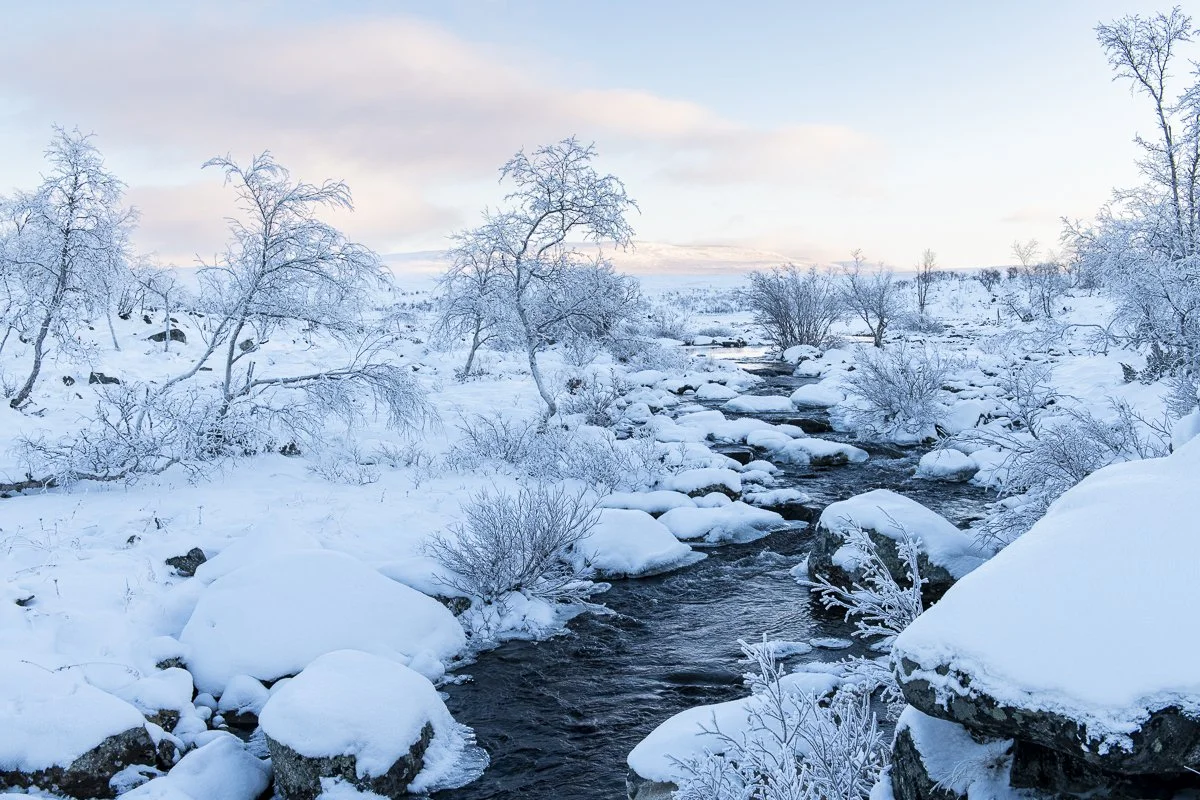
Late October in Finnish Lapland, as the first ice begins to form
A ship-based expedition is different. Much of the logistics are taken care of, but there is still plenty to prepare for. You need to understand the conditions you may encounter and be prepared for them, both land and sea. Crossing the Drake Passage, for example, can mean a couple of days of rough seas. Knowing what that might involve — physically as well as photographically — is part of preparing for the journey.
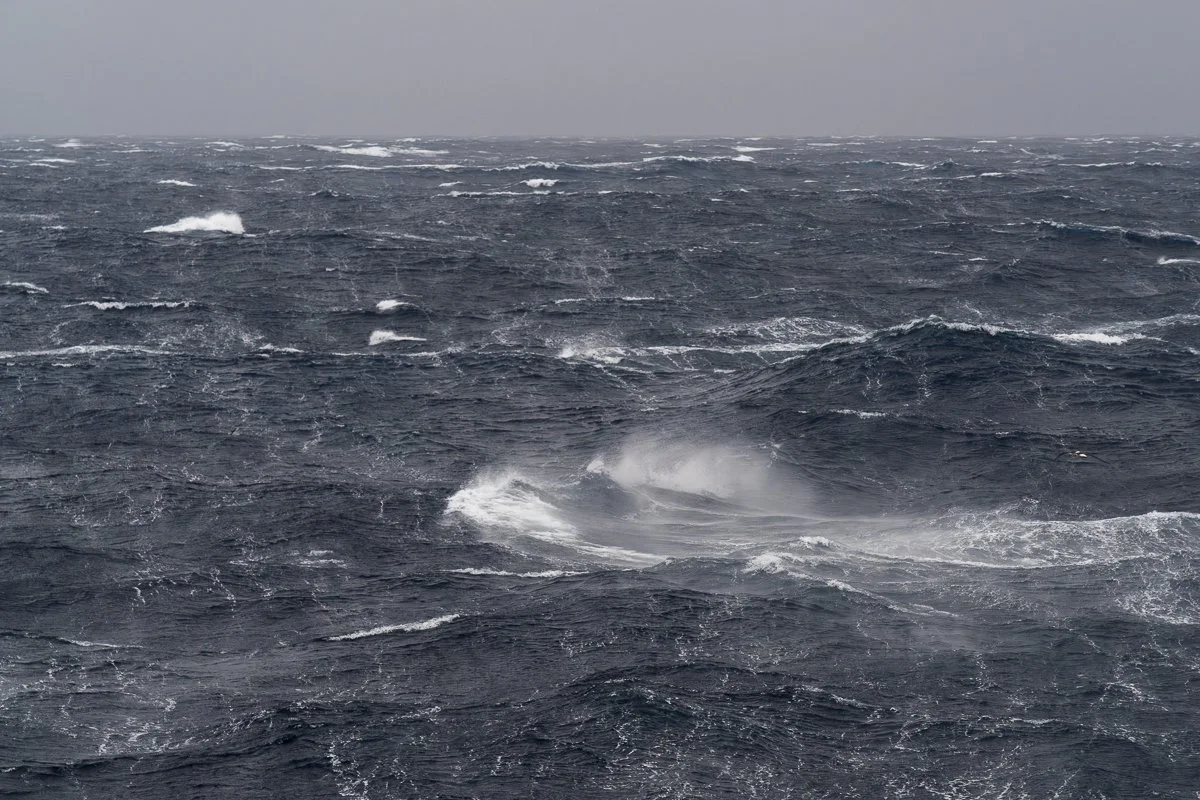
The Drake Passage in heavy wind.
Places such as Antarctica, South Georgia and the high Arctic are not destinations most people will ever have the opportunity to visit. The logistics may be organised by others, but arriving prepared — and being ready for whatever the journey brings — remains my responsibility.
Following the Season
The same place, especially in the polar regions, can be a very different photographic environment from one season to another. Wildlife behaviour, weather, light, snow and ice all change. Breeding, nesting, moulting, feeding and migration influence where animals are likely to be and what they may be doing.
I am particularly drawn to early spring and late autumn. They can be less predictable, with fewer calm days and less of the abundance associated with the height of summer. But they are also periods of transition, and that interests me.
One of the most memorable encounters was on our return from Antarctica in mid-November. In the middle of the Drake Passage, we encountered more than a hundred humpback whales travelling south towards Antarctica. Even our captain, who had made the crossing many times, had never seen anything like it. We stopped for more than an hour and simply watched. It was a remarkable moment, and one we could never have planned for.
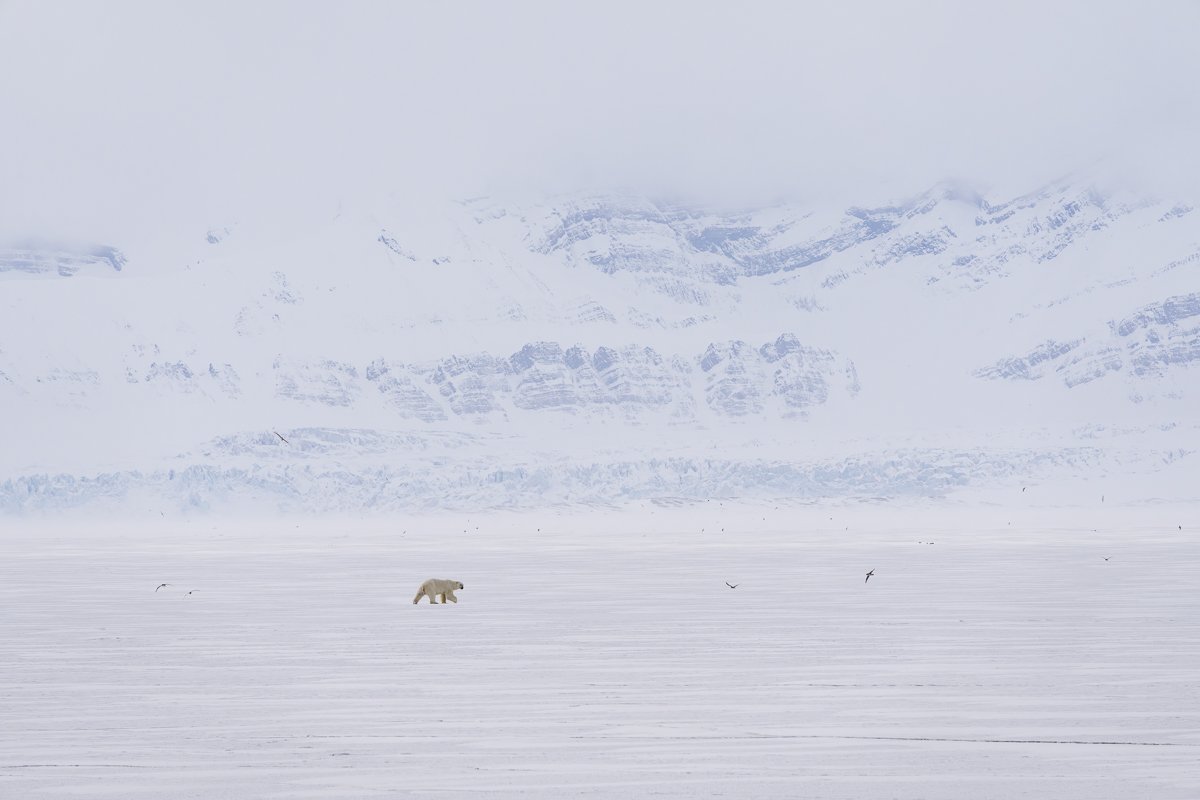
A polar bear crossing the sea ice in Svalbard
I research wildlife before travelling, not simply to make a list of species I might see, but to understand what might be happening. The purpose is not to predict the encounter. Wildlife rarely follows the plan. It is to arrive with enough knowledge to recognise an opportunity when it appears.
Choosing the Equipment
Over the years, I have become much more selective about what I take with me. My polar photography kit is fairly conventional for nature photography: two or three camera bodies, a range of zoom lenses and the practical accessories needed to work in the field. I have come to prefer zooms to primes, largely because of the flexibility they give me when photographing in changing conditions. From a Zodiac, for example, the distance to a subject can change within seconds, and there is rarely time to change lenses. A 24–70mm can move from a landscape to an environmental wildlife photograph, while a telephoto zoom gives me the same freedom with wildlife. At the same time, a few zooms cover the range that would otherwise require several prime lenses, saving both weight and space.
Weight is always part of the equation. Everything has to be carried, moved and protected, from the journey itself to the hours spent working in the field. I therefore try to keep the system as compact as possible, while making sure that the things I cannot afford to lose are covered twice. Two camera bodies are my minimum, together with spare batteries, memory cards and other essentials. I learnt the importance of this on the way to Antarctica, when one of my camera bodies became soaked with seawater. Seeing water running over a camera I still needed for the journey was not a particularly pleasant moment. Fortunately, I had a second body. Since then, redundancy has become an essential part of how I prepare. A second or third body also allows me to keep different lenses mounted, reducing the need to change them in rain, snow or sea spray.
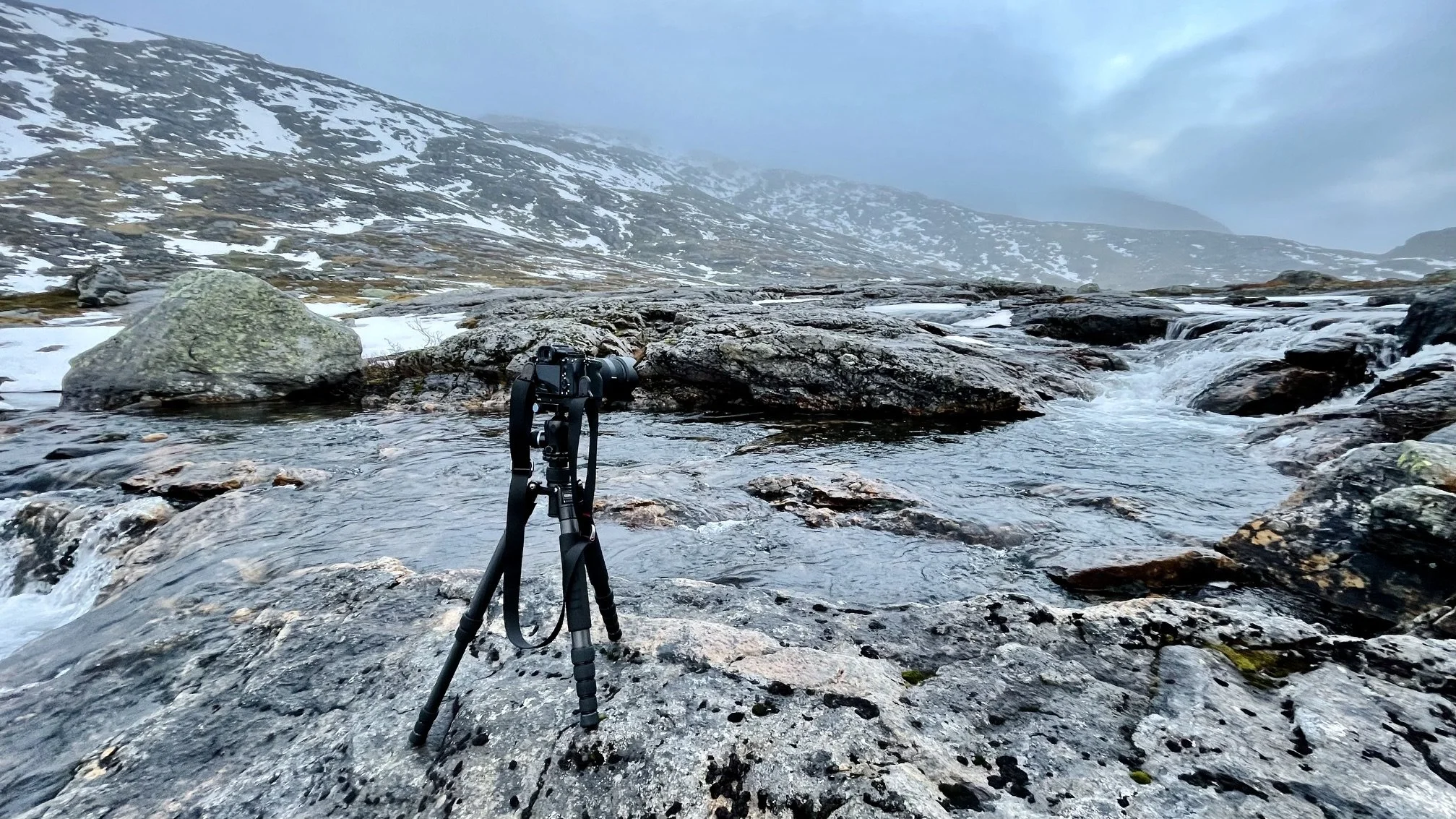
Photographing a small river in Senja, northern Norway.
Ultimately, I want to be able to photograph without worrying about the equipment. In harsh conditions, that matters. I want to know that the system is reliable, manageable and that I have a solution if something goes wrong. Once those things are taken care of, thinking about the equipment can disappear into the background.
Dressing for the Conditions
There is something slightly absurd about preparing for freezing conditions while it may still be over +25°C and sunny outside. But once in the polar regions, being properly dressed can make the difference between being able to photograph and having to go back inside.
More than ten years ago, I went to a sailing equipment shop in Helsinki looking for a heavy, waterproof down jacket for a polar expedition. I soon discovered the problem: you could find warmth or waterproofing, but rarely both in the same jacket. Down was for cold, Gore-Tex for wet conditions — and apparently nobody went sailing in weather cold enough to need both. I left without a jacket. Eventually, I learnt about a Swedish sailing brand that made exactly what I was looking for and ordered one online. It turned out to be one of the best pieces of clothing I have taken to the polar regions.
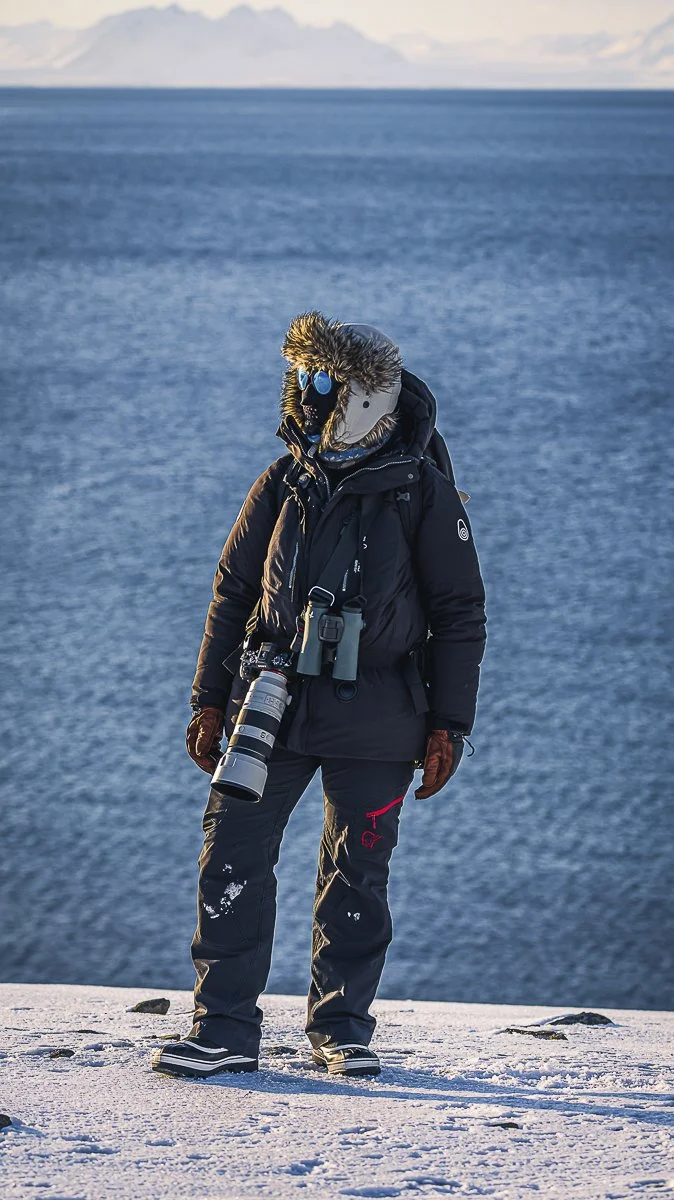
Photographing in the Arctic winter. Photo by Mats Carduner.
I dress in layers so I can adapt to changing conditions. The outer layers need to protect against wind, rain, snow and sea spray, while the layers underneath provide warmth. In winter in the Arctic, I also take extra warm clothing — wool and down — because wind can make already low temperatures considerably harsher.
I learnt this the hard way. A couple of years ago, I got frostbite on my face. I had probably experienced it before, as a child, but this time I became much more aware of its consequences. The following Arctic winter, even moderate exposure to wind and cold made my face hurt. After a while outside, the cold was no longer something I could simply ignore. Eventually, I bought a proper face protector and it made an immediate difference. It was a simple lesson, but one I have not forgotten: in extreme conditions, you really do need to protect your whole body, including the parts that are easy to overlook.
There is also the eternal problem of finding gloves that are warm enough while still allowing me to operate the camera. I have tried many brands and combinations over the years, and I am still not sure I have found the perfect solution. In extreme cold, warmth and dexterity are often competing requirements. I always take at least two pairs, preferably waterproof ones. Even in winter, a Zodiac can leave you soaked from sea spray, and discovering that your only pair is wet when you still have several hours outside is not a pleasant experience.
Clothing is not simply about comfort. It is part of being able to stay outside, concentrate and photograph.
Leaving Room for the Unplanned
I might start preparing months before departure, particularly when organising a trip myself. At this stage, it is mainly about researching the location, understanding the conditions and making the necessary bookings.
The practical preparation starts a couple of weeks before departure: planning what to take, checking the equipment and making the final decisions. I have used a packing list for years and adapt it for each trip. It is rather mundane, but it means that the essentials are already covered. There are still always more things to check than expected: clothing that needs replacing, batteries and memory cards that have been used too much, sensor and lens cleaning, backups, software updates and all the small items that are easy to overlook.
Preparation has its limits, of course. I can research the location, study the wildlife and prepare for the weather. I cannot prepare for the exact light, the behaviour of an animal or the moment when a scene suddenly comes together. That is ultimately what preparation is for: not to control the journey, but to remove the avoidable problems so that I can be fully present when those moments arrive.
Then I can simply be present.
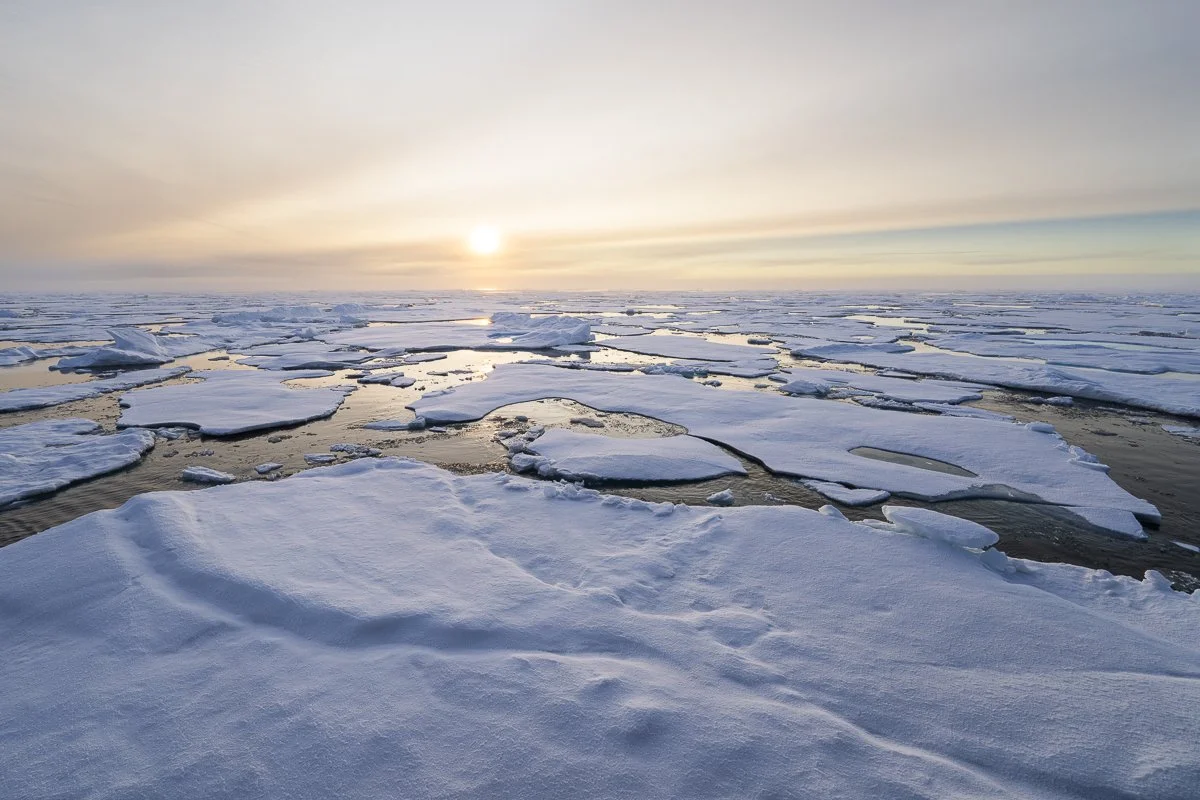
Sea ice in northern Greenland at sunset.