
Before the Photograph: The Art of Observation
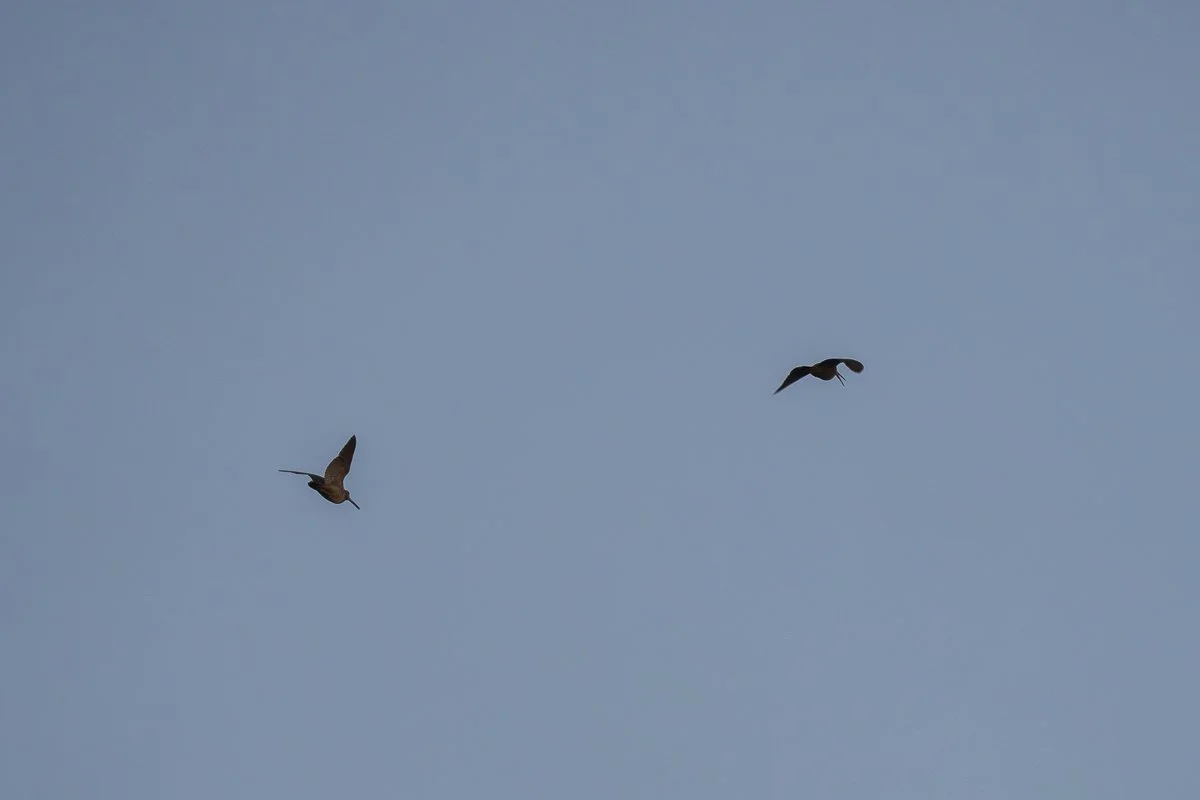
Eurasian Woodcocks in dusk
A few weeks ago, just after dusk in the Saimaa lake, I heard an unfamiliar sound overhead. Two birds crossed the darkening sky, little more than silhouettes against the summer-dark sky. I raised my camera and took a few photographs—not because they would be beautiful, but because they might help me identify the birds later. They didn't. Two evenings later I heard the same distinctive call again. This time I had Merlin Bird ID running on my phone. Within seconds it identified the birds as Eurasian Woodcocks. Suddenly those rather ordinary photographs had a story. More importantly, I realised how little attention I had paid to birdsong until then.
For years, birdsong had simply been part of the soundtrack of being outdoors. Pleasant, but anonymous. A couple of weeks ago I installed Merlin Bird ID, a free app developed by the Cornell Lab of Ornithology. It recognises birds by their songs in real time and can also help identify species from photographs. With bird packs covering thousands of species around the world and support for many languages, it has quickly become another tool that I carry into the field. I'm still discovering how to make the best use of it, but it has already changed the way I approach bird photography. Instead of hearing sounds without a face, I now have an idea of which species are nearby and what I might be looking for. More often than not, I also find myself reading about the species afterwards—whether they are common in the area or unusual visitors. On a few occasions the app has surprised me with species that are considered rare locally, although perhaps hearing is a better word than seeing.
That new way of listening transformed an early morning at Siikalahti in eastern Finland. The marsh was already alive when I arrived after the sunrise. Within minutes Merlin identified around twenty species singing at the same time. I certainly didn't see twenty species, but for the first time I knew what I was listening for. Despite it being July, long after the excitement of spring migration, there were still many birds around. The landscape itself hadn't changed. My awareness of it had.
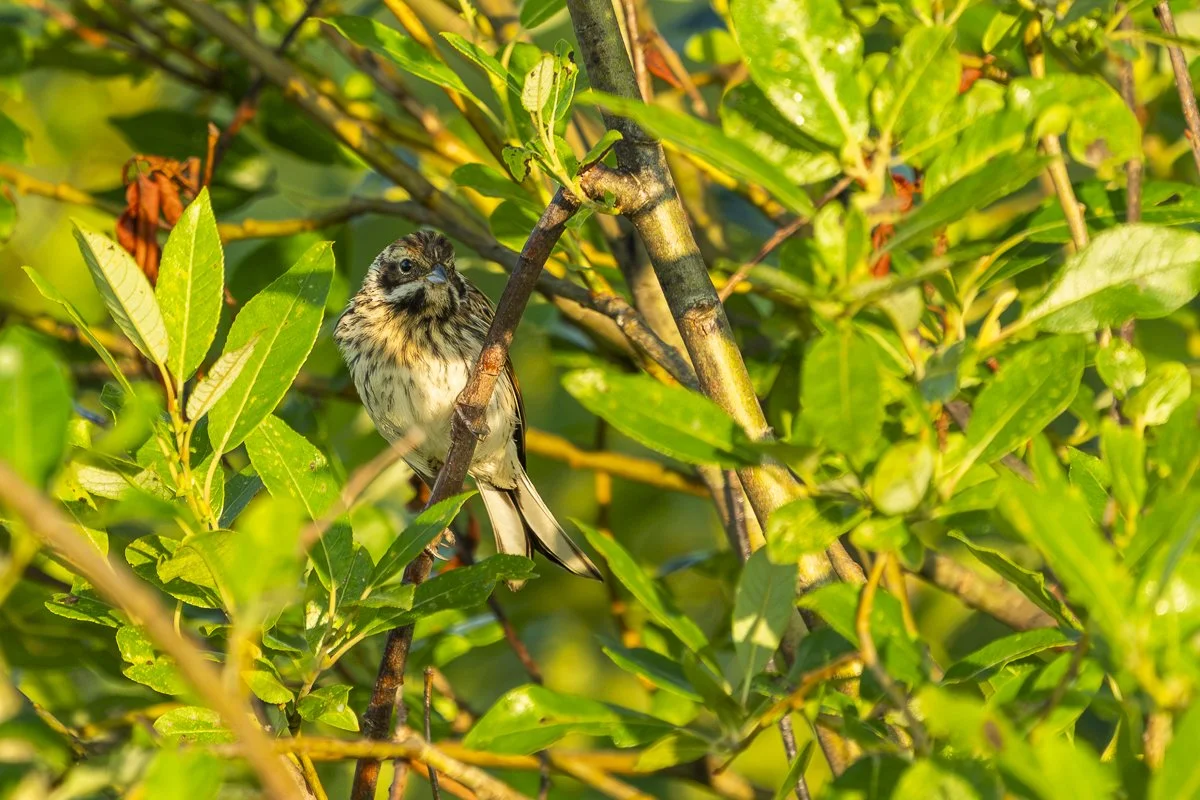
Reed Bunting hiding behind the leaves
One of those songs belonged to a Reed Bunting. The app pointed me in the right direction, but the bird remained invisible somewhere behind a curtain of leaves. Without binoculars I would probably have continued walking. Instead, I slowly scanned the branches until I finally found the singer, perfectly still in the morning light. Only then did I raise my camera. It struck me afterwards that I was spending less time looking through the viewfinder and more time observing the world around it. The camera had become the final step rather than the starting point.
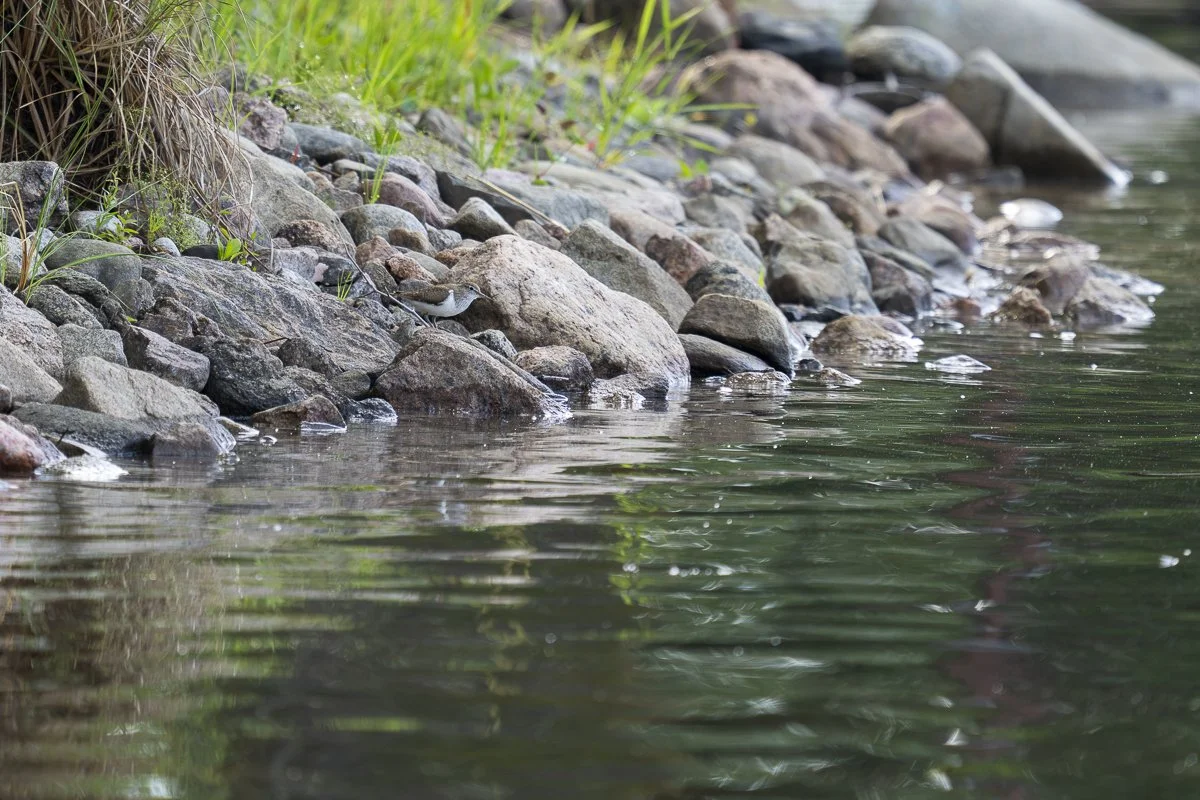
Common Sandpiper in plain sight
A similar lesson followed later in Saimaa, this time on a quiet afternoon. I was sitting on a platform when Merlin picked up the call of a Common Sandpiper. Again, I couldn't see the bird with the naked eye. Through my binoculars I eventually found it standing among shoreline stones that matched the colour of its plumage almost perfectly. Had I had only the camera, I might never have noticed it. Instead of reaching for the shutter immediately, I watched. The sandpiper stood quietly along the water's edge, gradually becoming accustomed to my presence. Eventually it took flight, calling as it flew. By then I had a good sense of where it would go, and I was ready. Those flight photographs weren't the result of fast autofocus or luck; they were the result of listening, observing, waiting and anticipating.
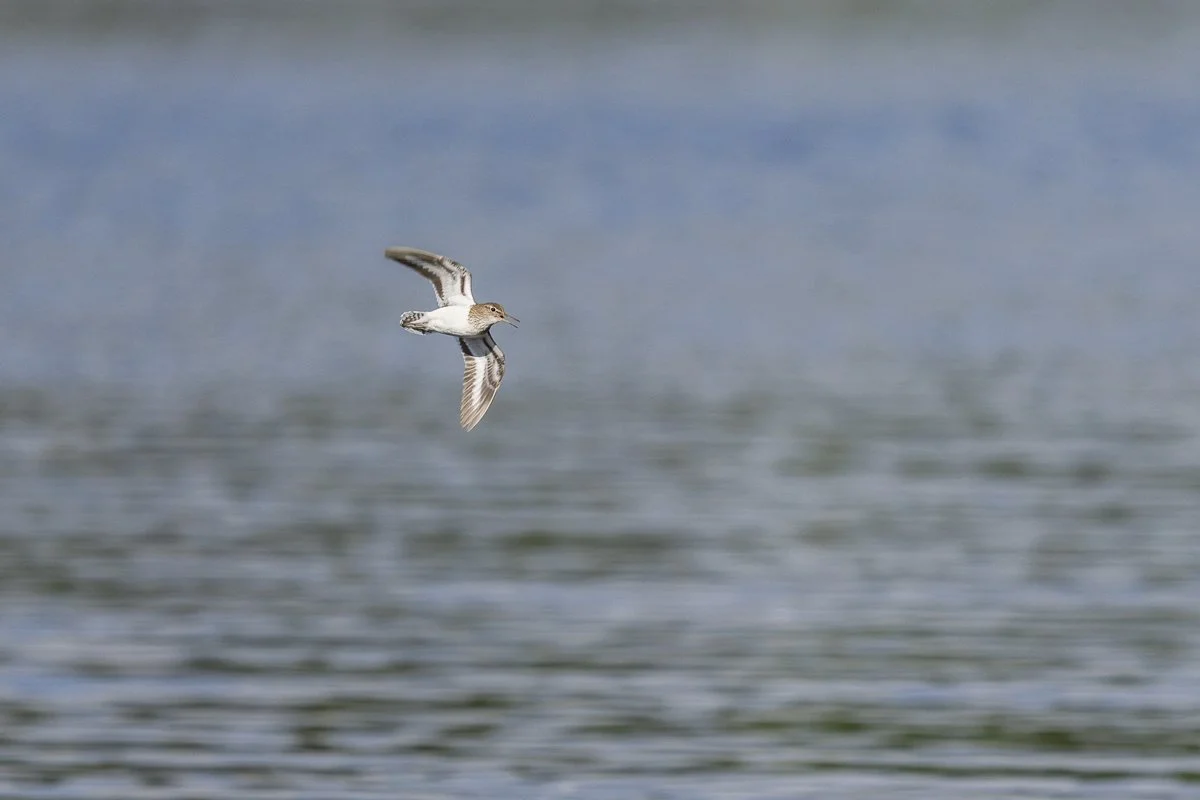
The same Common Sandpiper singing on its way
Binoculars have been part of my wildlife photography for well over a decade, long before Merlin found its way into my pocket. They have probably helped me make more photographs than any accessory I own. I've occasionally travelled with photographer friends who didn't carry binoculars, and they often missed wildlife that was hiding in plain sight. My first pair were Swarovski 8×30 binoculars. Their exceptional optics taught me that image quality matters far more than magnification. A couple of years ago I upgraded to 10×42 binoculars after spending hours comparing them with the 12×42 model. In the end, the decision was simple: sooner or later my hands begin to tremble, and higher magnification only exaggerates the movement. The same applies on boats, ships and Zodiacs, where a steadier image is usually more valuable than a closer one. Yes, they add another piece of equipment to carry, just as the app asks a little more from my phone battery. Both are simply tools.
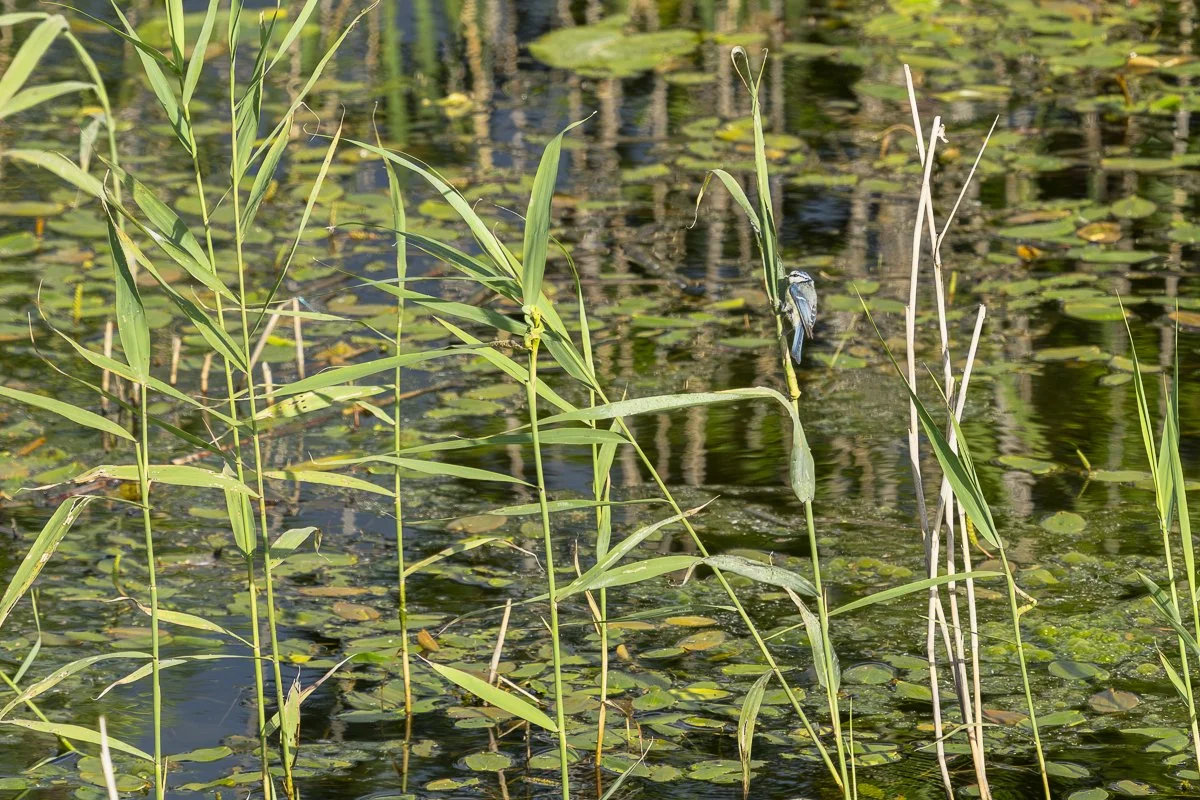
Blue Tit revealed itself by the song
The real lesson from these recent outings has very little to do with technology. Merlin has taught me to listen more carefully. Binoculars have taught me to look more patiently. Neither replaces experience or intuition, but together they have reminded me that wildlife photography begins long before the shutter is pressed. Before every photograph comes something far more important: an unfamiliar call in the distance, a careful scan through binoculars, the quiet satisfaction of finally finding the bird, and a moment of connection with the natural world. In the end, the camera simply records what your ears, your eyes and your intuition have already discovered.