
Flamingos at Sunrise
Early June brought me to a very different landscape from the northern wetlands I had been visiting only weeks before. I left half an hour before sunrise, with just a short ten-minute drive separating my accommodation from the Guadalhorce Nature Reserve. Visiting a new location always comes with a little uncertainty. Where is the best place to begin? How easy is it to move around? Will the morning unfold as hoped? Fortunately, any concerns disappeared almost immediately. After parking the car, it was only a short walk to the first hide, and the reserve quickly revealed how accessible and welcoming it is.
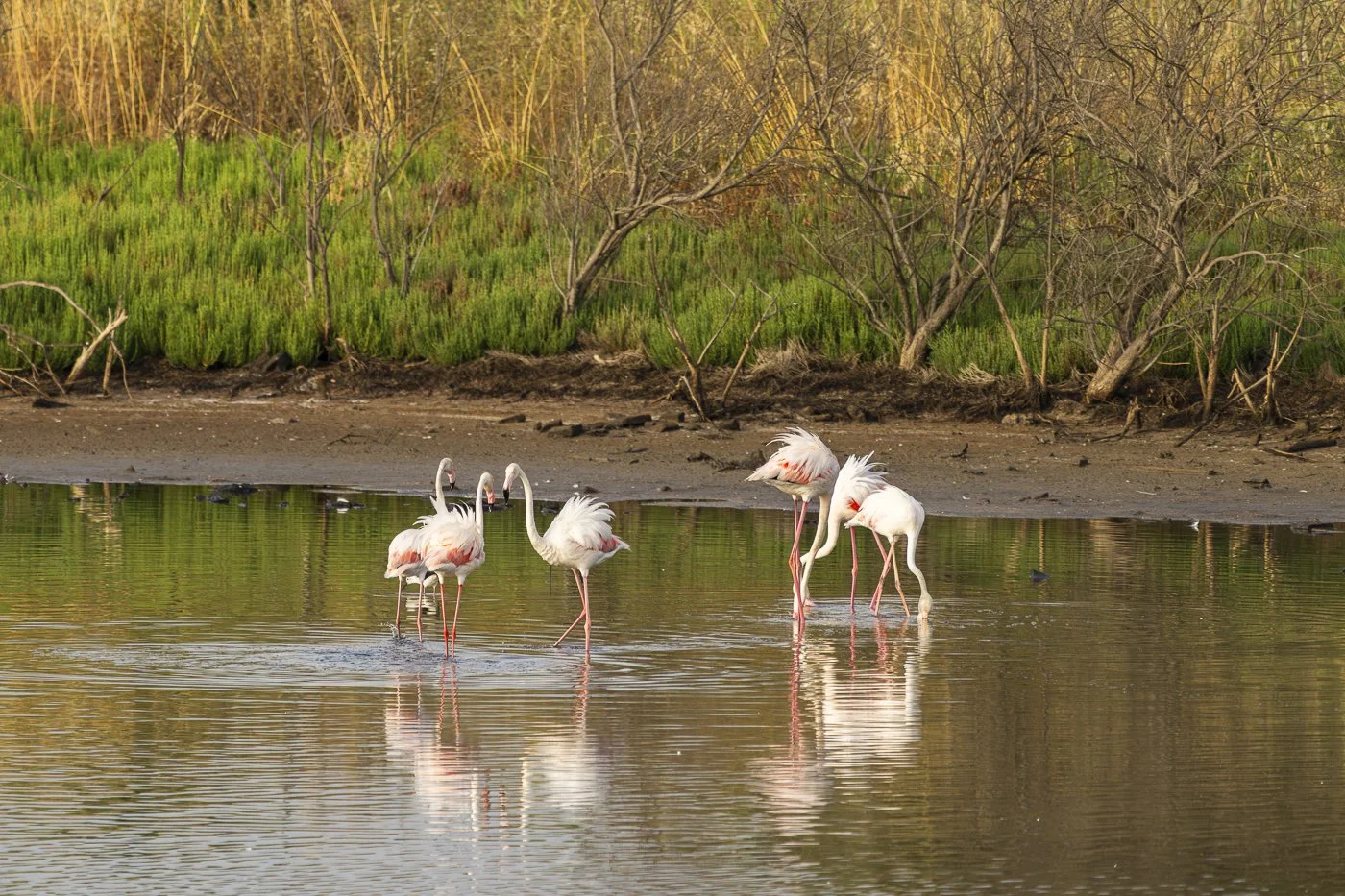
Greater Flamingos
The first stop was the Observatory of Laguna Grande. The morning light was already warm, bathing the lagoons in soft golden tones that felt very different from the crisp dawns of northern Europe. Activity was modest at first, but there was enough to keep both binoculars and camera busy. Avocets searched the shallows, little egrets stood quietly in the shoreline, a Common Moorhen emerged from the vegetation, and Kentish Plovers patrolled the exposed mud. It was a pleasant beginning, yet something suggested there might be more waiting elsewhere.
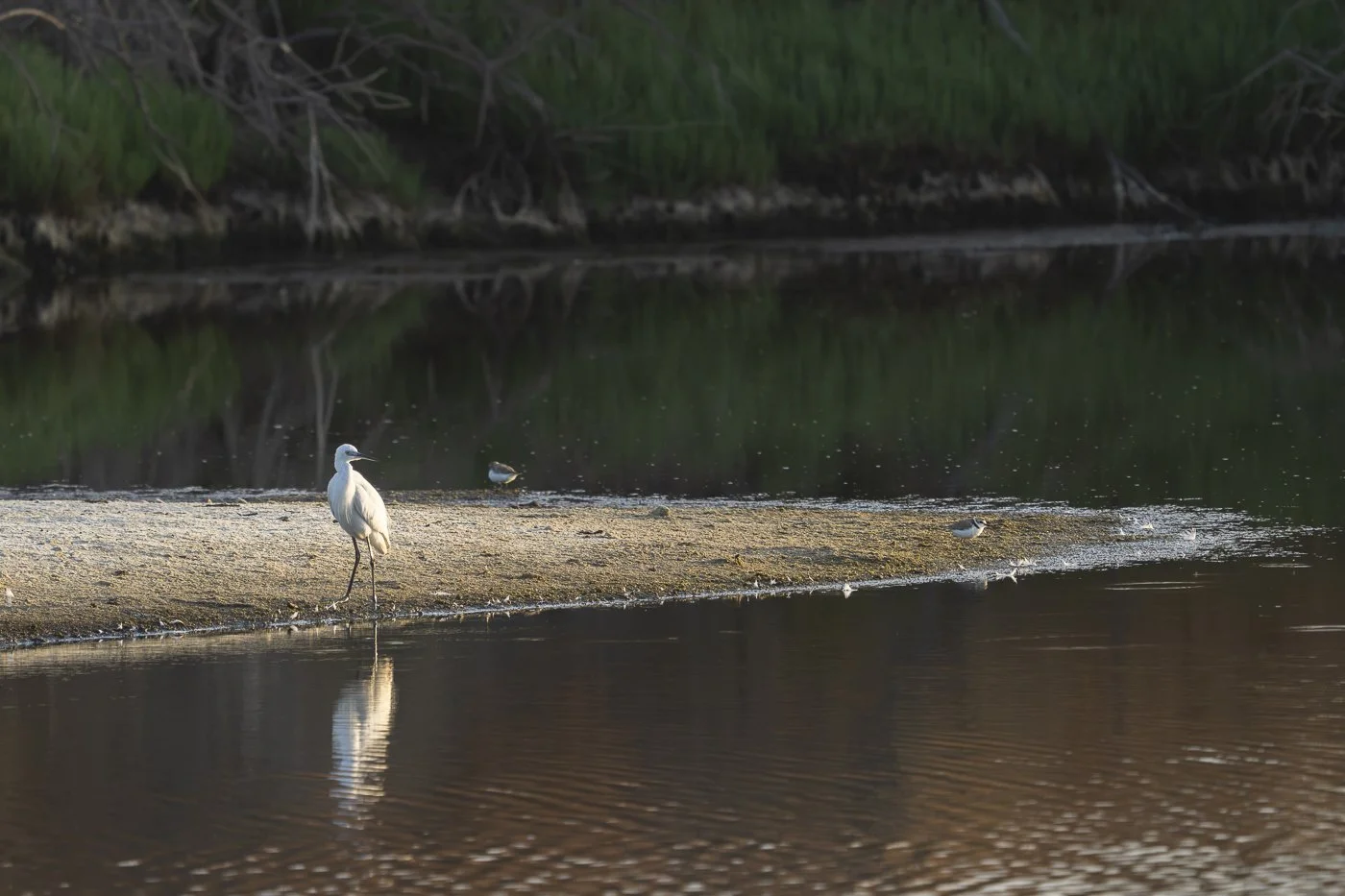
Little Egret
I decided to retrace my steps and continue along the opposite side of the lagoon. That decision transformed the morning. Suddenly the wetlands seemed full of life. Dozens of Greater Flamingos gathered in the distance, their reflections shimmering in the calm water. More avocets and little egrets appeared alongside Black-winged Stilts, Cattle Egrets, Common Redshanks, Black-headed Gulls, Little Grebes, House Sparrows and Common Blackbirds. There were undoubtedly many more species that escaped my attention. One of the highlights was watching avocets and Black-winged Stilts accompanied by their tiny juveniles. Their oversized legs and cautious movements brought a gentleness to the morning that was impossible not to photograph.
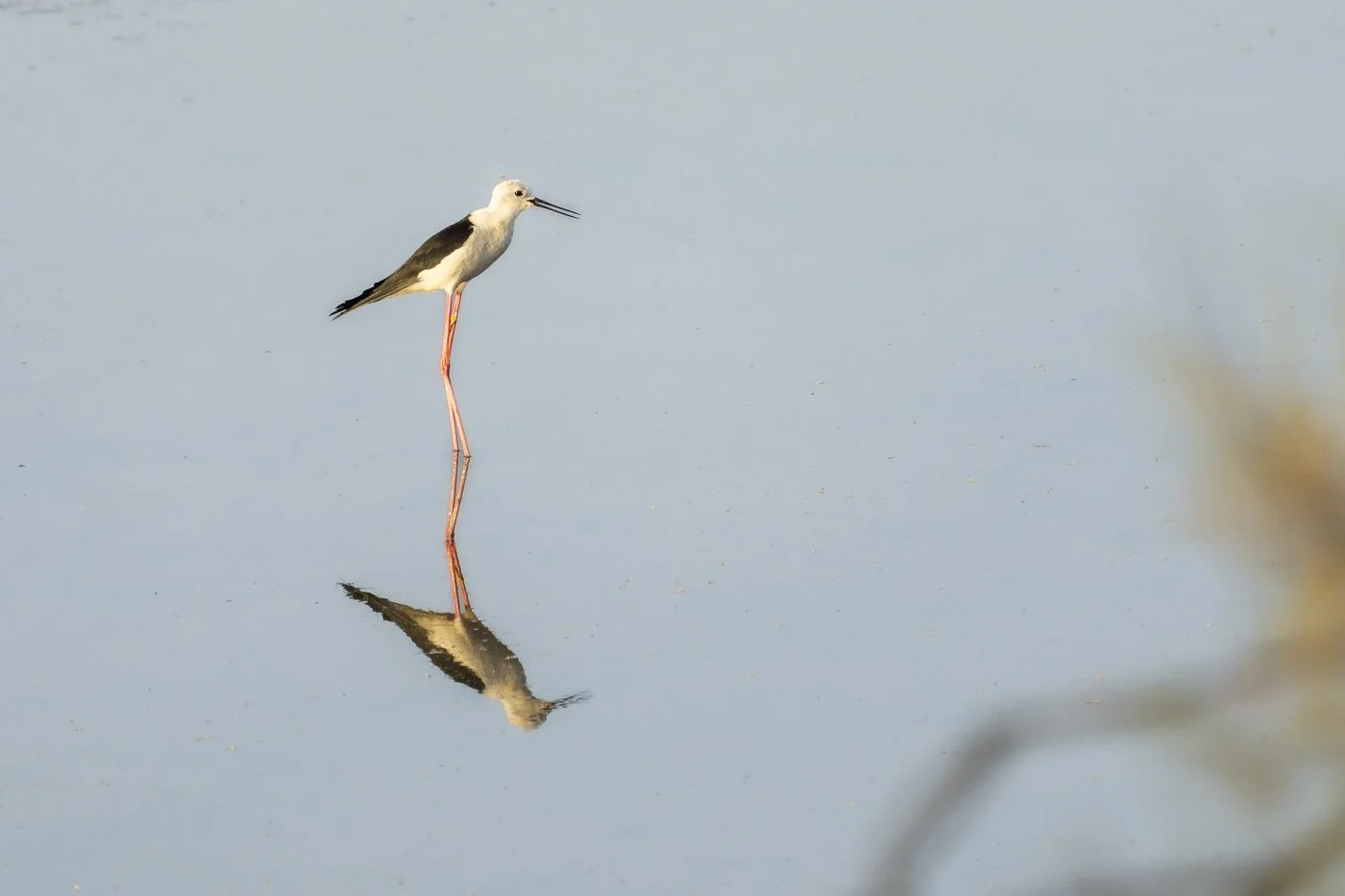
Black-winged Stilt has something to say
The Guadalhorce Nature Reserve lies at the mouth of the Guadalhorce River, only a few kilometres from the centre of Málaga. Surrounded by one of Spain's largest coastal cities, it forms an important oasis for wildlife along the Mediterranean flyway. Its lagoons, reedbeds, river channels and coastal habitats provide breeding, wintering and resting areas for hundreds of bird species throughout the year. Depending on the season, visitors may encounter flamingos, herons, waders, terns, gulls, raptors and a remarkable variety of migratory birds moving between Europe and Africa. It is a reminder that even in the shadow of an urban skyline, nature can thrive when given the space.
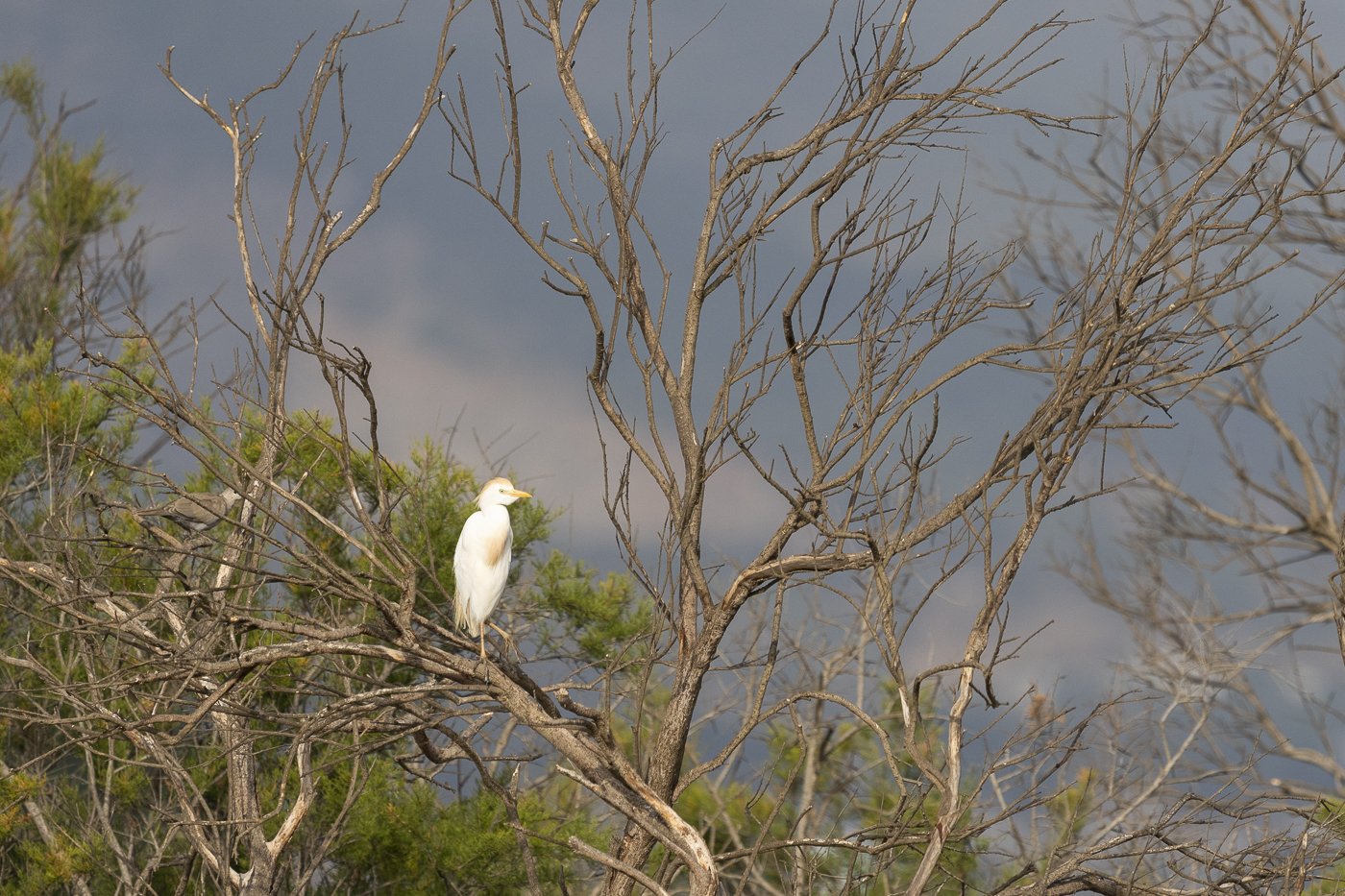
Cattle Egret
Photographing here also felt different from photographing birds in Finland. The day begins later, the air is already pleasantly warm before sunrise, and the pace somehow feels less hurried. Although the nearby motorway is never completely absent and the city remains just beyond the reserve, the atmosphere along the lagoons is surprisingly peaceful. Soft morning light reflected across the water, birds moved quietly through the wetlands, and conversations with local birdwatchers and photographers added another dimension to the visit. They mentioned that seeing so many flamingos at once is far from guaranteed. We had simply arrived on a particularly fortunate morning.
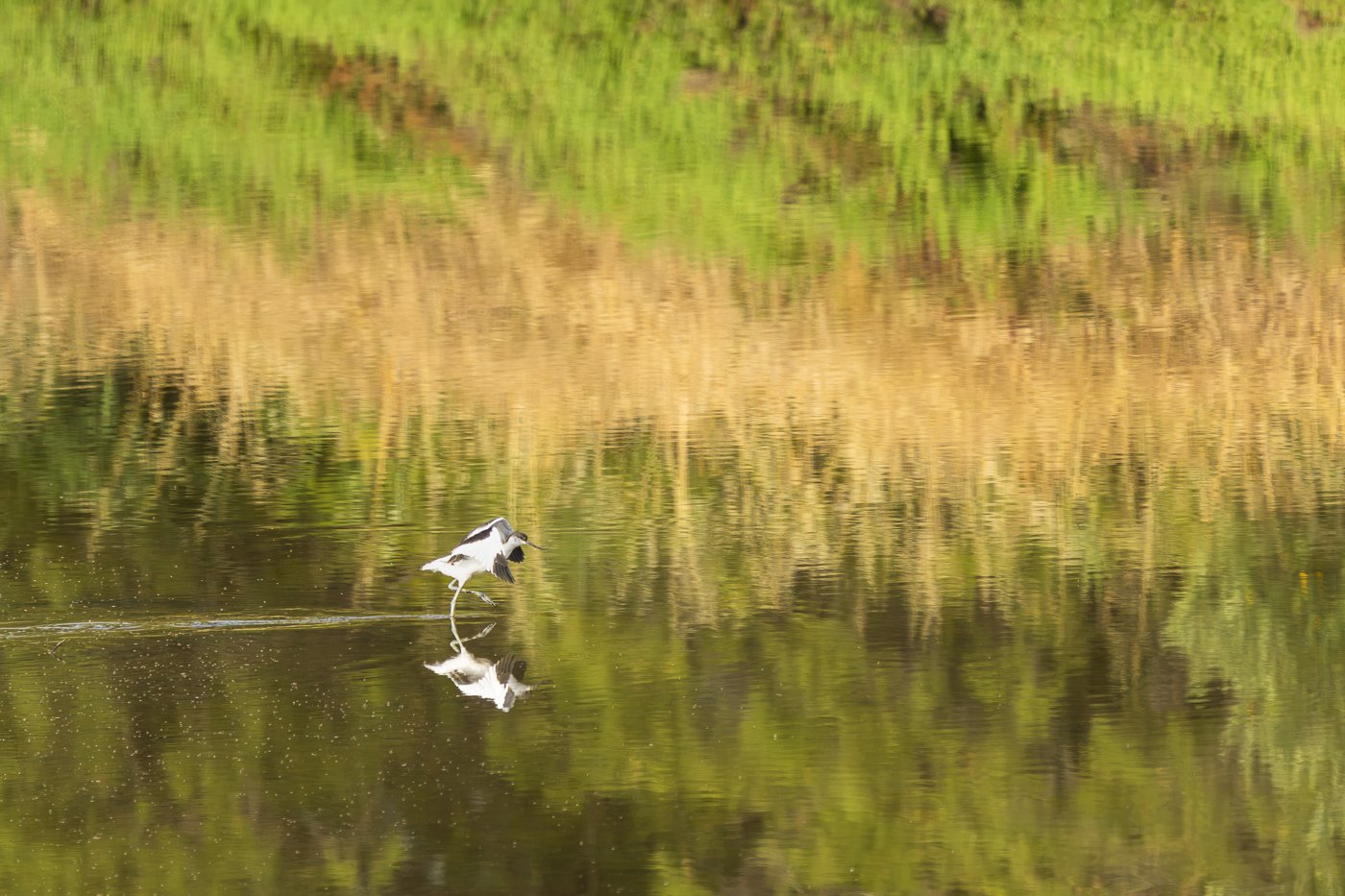
Juvenile Avocet
From a photographic perspective, Guadalhorce rewards patience and reach. A long telephoto lens is almost essential, and my 200–600 mm proved to be the right choice throughout the morning. Most of the hides and observation points sit above the lagoons, making the low-angle perspective so familiar in wildlife photography difficult to achieve. Instead, the challenge becomes one of composition—working with distance, reflections and behaviour to create images that convey the character of the birds and the landscape rather than relying solely on eye-level portraits.
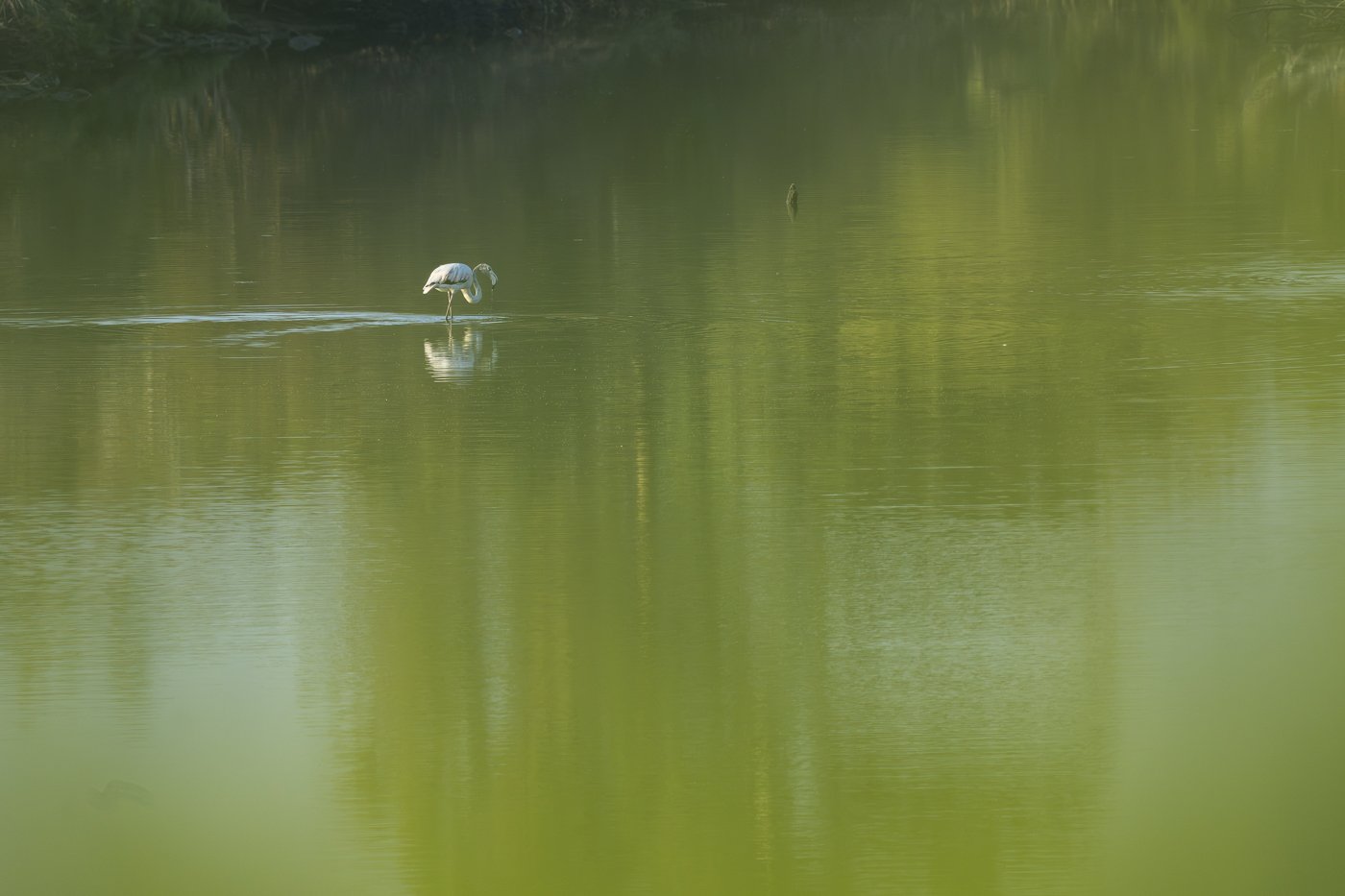
Greater Flamingo in green
After a few rewarding hours, it was time to leave the reserve behind. The birds continued with their morning while I headed back toward Málaga for a well-earned breakfast. Every new location teaches something different. Guadalhorce reminded me that remarkable wildlife experiences do not always require remote wilderness. Sometimes they are waiting quietly at the edge of a city, illuminated by the first light of a warm Andalusian morning.
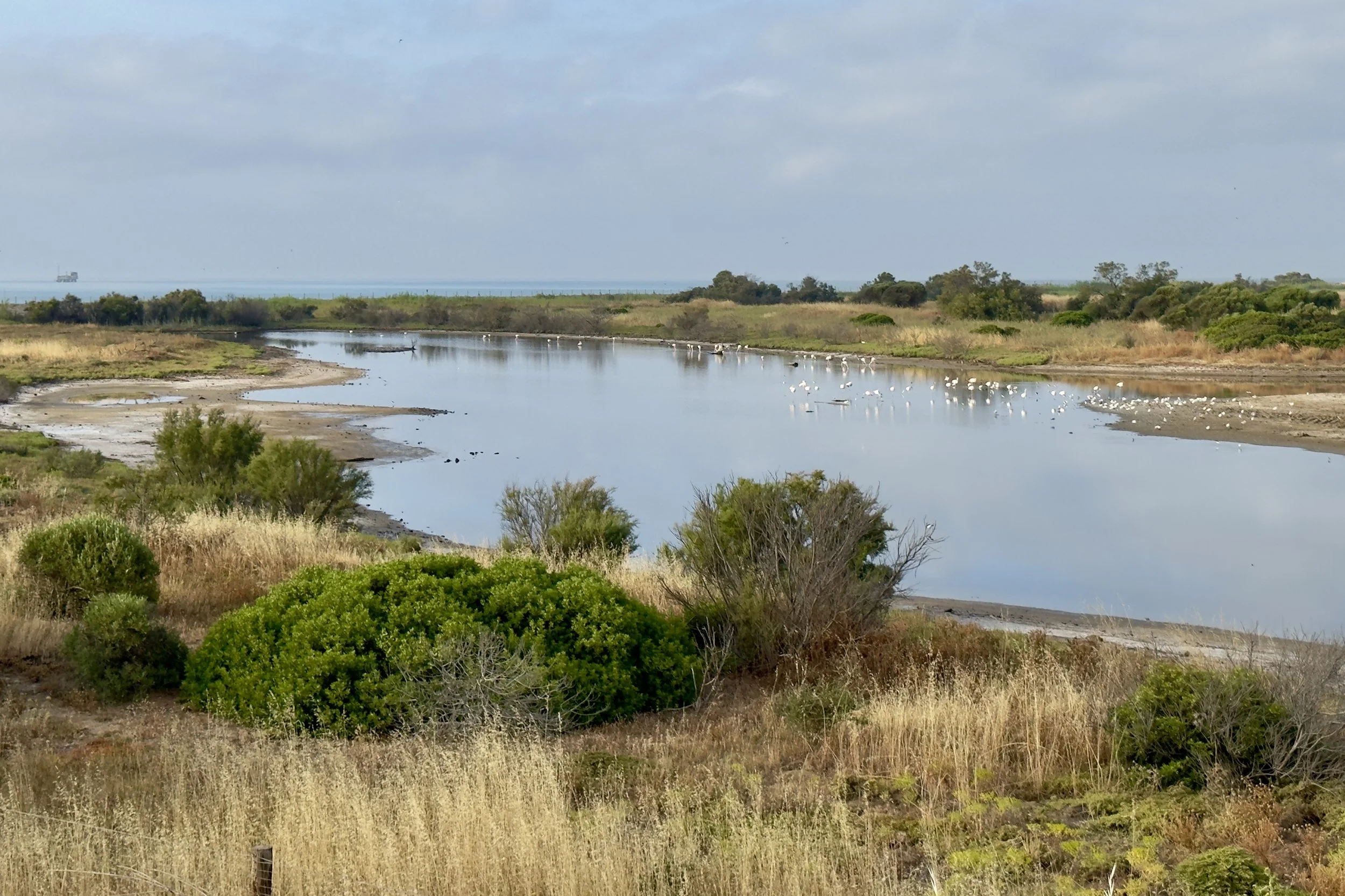
Laguna Grande in Guadalhorce