
Estancia Olga Teresa, Cerro Palomares, Southern Patagonia, Chile
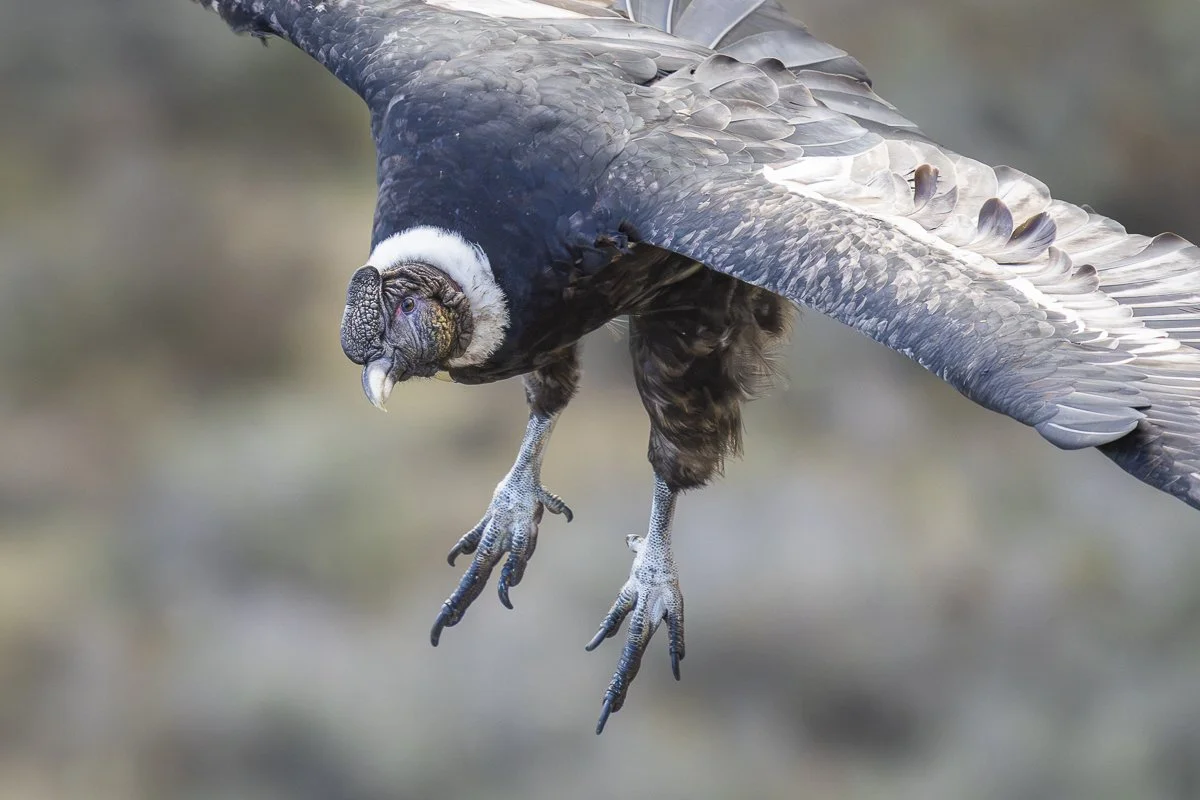
A condor passing so close that its wings extend beyond the frame. One of the moments when the distance between us seemed to disappear.
Andean condors are often seen as distant silhouettes, circling high above the mountains or resting on a rocky outcrop far beyond reach. Having encountered them many times in Patagonia, I had long wanted to photograph these magnificent birds from closer quarters. This time, I made the journey to Estancia Olga Teresa with my photographer friend Marianne. Located about an hour’s drive from Punta Arenas, the estancia offers access to Cerro Palomares, one of the important condor roosting sites in Chilean Patagonia. The mountain acts rather like a hotel for the birds: they gather here to rest after a day of flying, although their nesting sites are elsewhere.
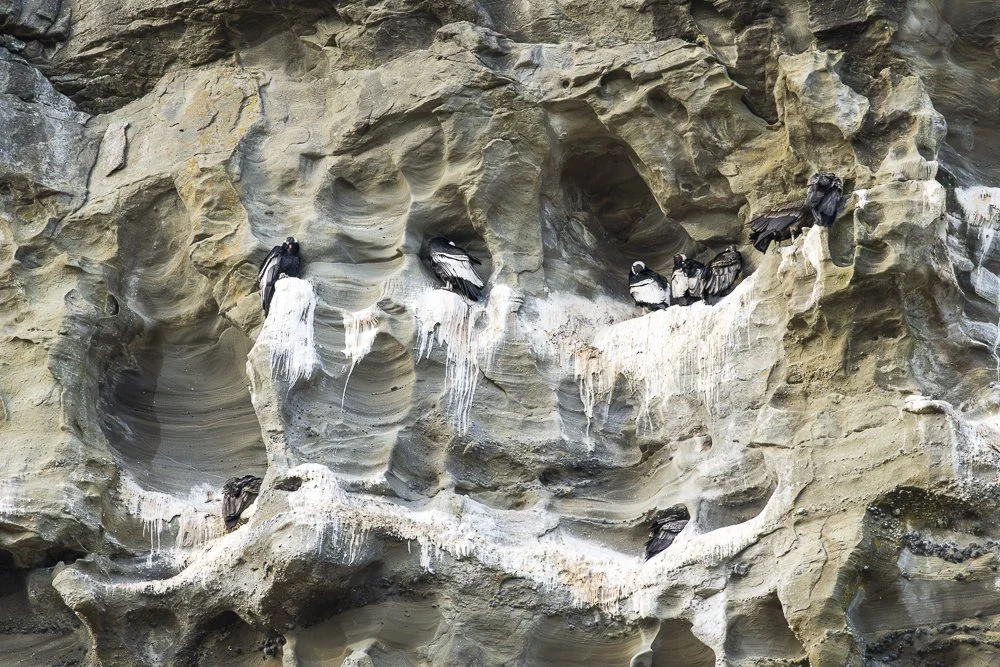
The rocky wall of Cerro Palomares serves as a resting place, or a hotel, for the condors, a place they return to after a day spent soaring over Patagonia.
I had arranged the visit in advance with Cristián Concha Paelle of the estancia. In the afternoon, we met our guide, Nelson, who would lead us up the mountain to a vantage point at eye level with the condors. Even before beginning the ascent, we spotted the first birds remarkably close to us. After about 40 minutes of climbing and walking, we reached a position above the rocky wall where the condors gather to rest. The timing is important. Condors depend on rising air and favourable winds to remain airborne, and Patagonia offers plenty of both. As the afternoon progresses, birds return to the mountain after spending much of the day soaring over the surrounding landscape.
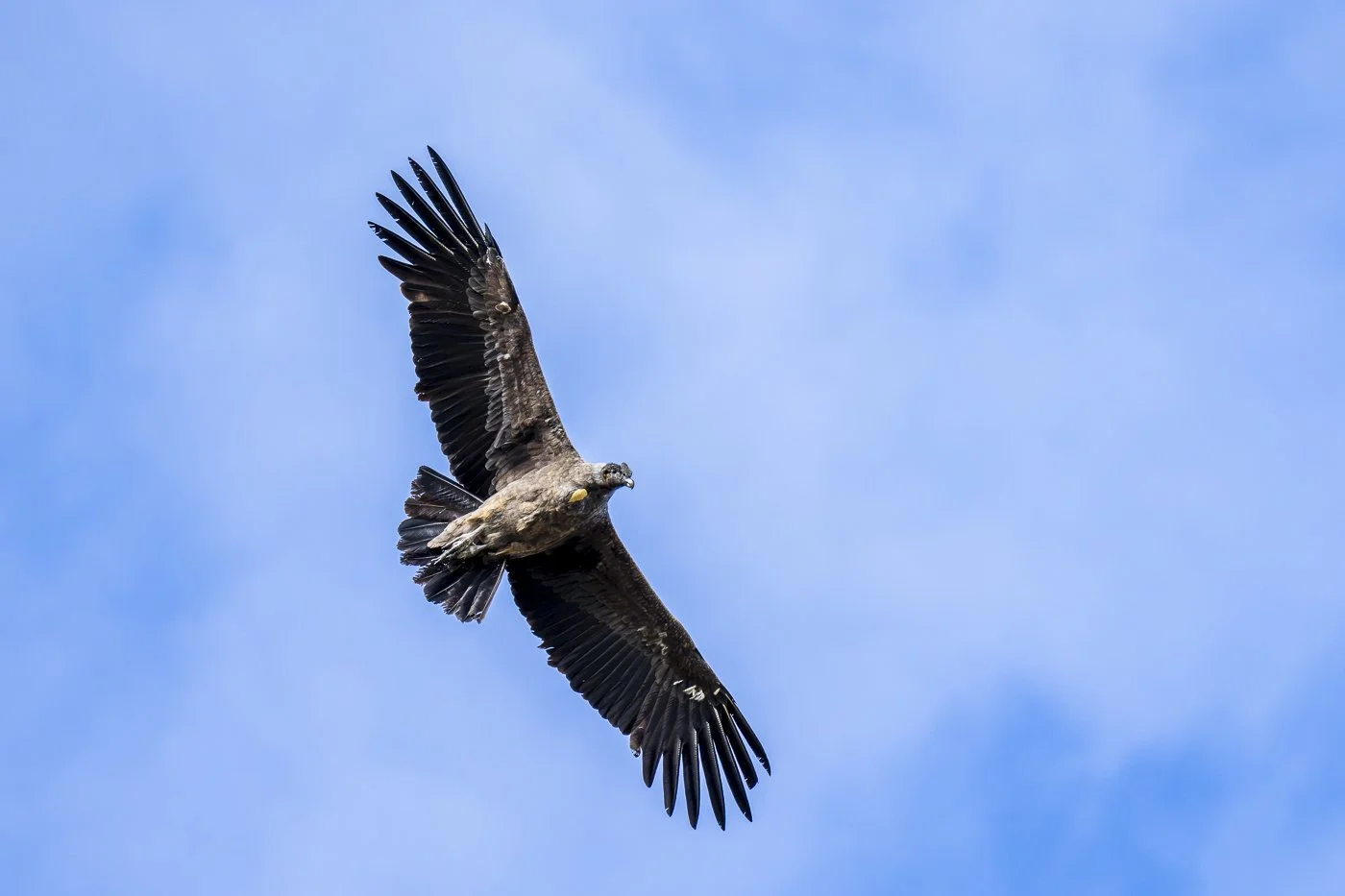
One of the first condors we spotted that afternoon, just when we arrived.
We spent several hours photographing them. Sometimes they were distant, and we waited for another opportunity. At other moments, they passed surprisingly close, offering views from above, below and almost directly at eye level. There were adults and younger birds, their different plumages making the variety within the group particularly interesting. We saw tens of condors over the course of the afternoon. It was a remarkable experience to observe them at such close range, with enough time to watch their movements rather than simply react to a passing silhouette.
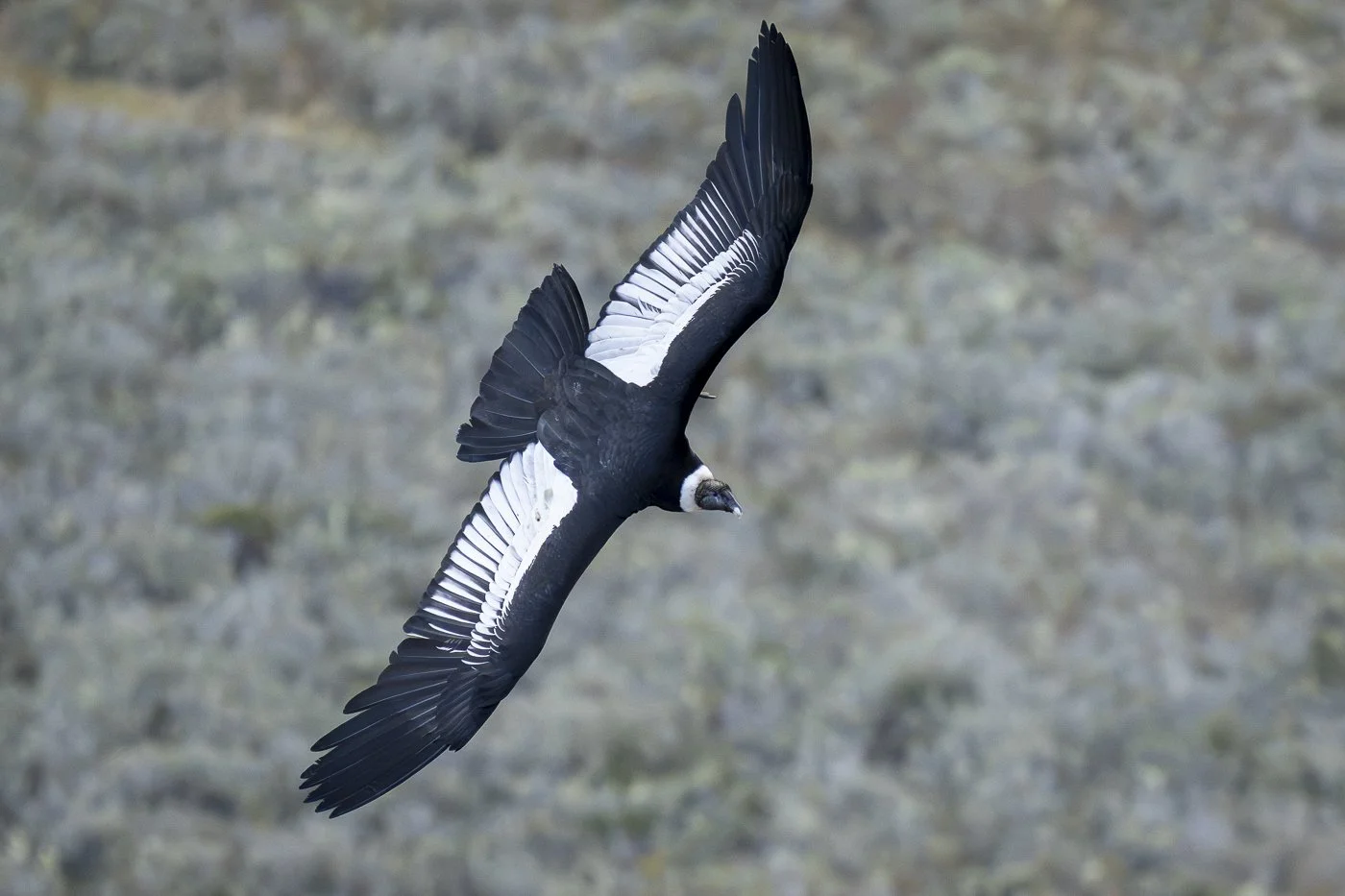
An adult condor passing below our position, revealing the distinctive pattern of its wings from above.
Photographing in the exposed conditions of the mountain brought its own challenges. I used both the Sony 200–600mm and 70–200mm lenses, switching between tighter views and wider compositions as the distance changed. The strong Patagonian wind made handling the longer lens more demanding, particularly when following birds in flight. The changing weather added another dimension. Heavy rain showers passed through the surrounding landscape, and we were fortunate that none reached our position during the afternoon. Watching the rain move across the mountains was a reminder of how quickly conditions can change in this part of Patagonia.
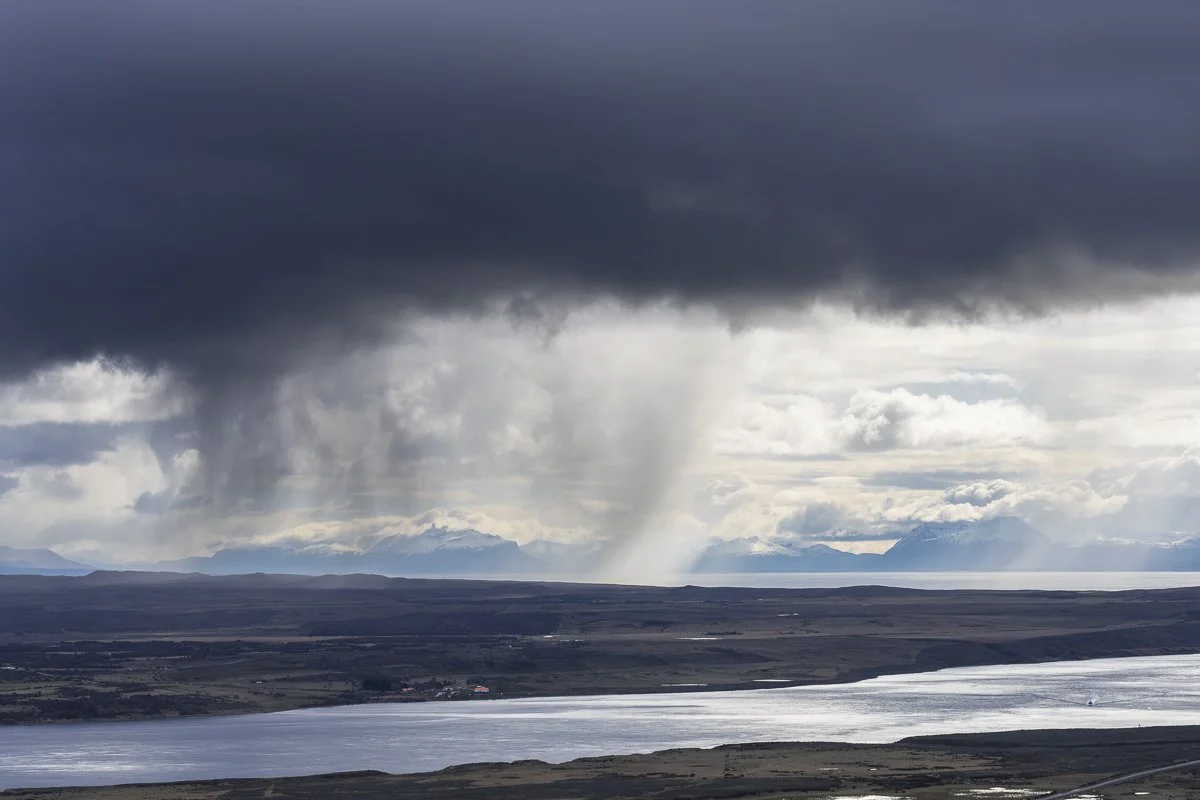
Rain moving across the surrounding landscape. The weather was never far away, even when our position on the mountain remained dry.
I had attempted to photograph condors on previous occasions, but they were always little more than distant shapes against the sky. This time, everything changed. Thanks to Nelson’s knowledge of the mountain and his guidance, we were able to spend time observing these magnificent birds at close range and finally photograph them eye to eye. From the rocky ledges below to the open air above the mountain, there was always something happening. I left with a new sense of what might be possible, already thinking about how I could approach photographing condors on a future visit.
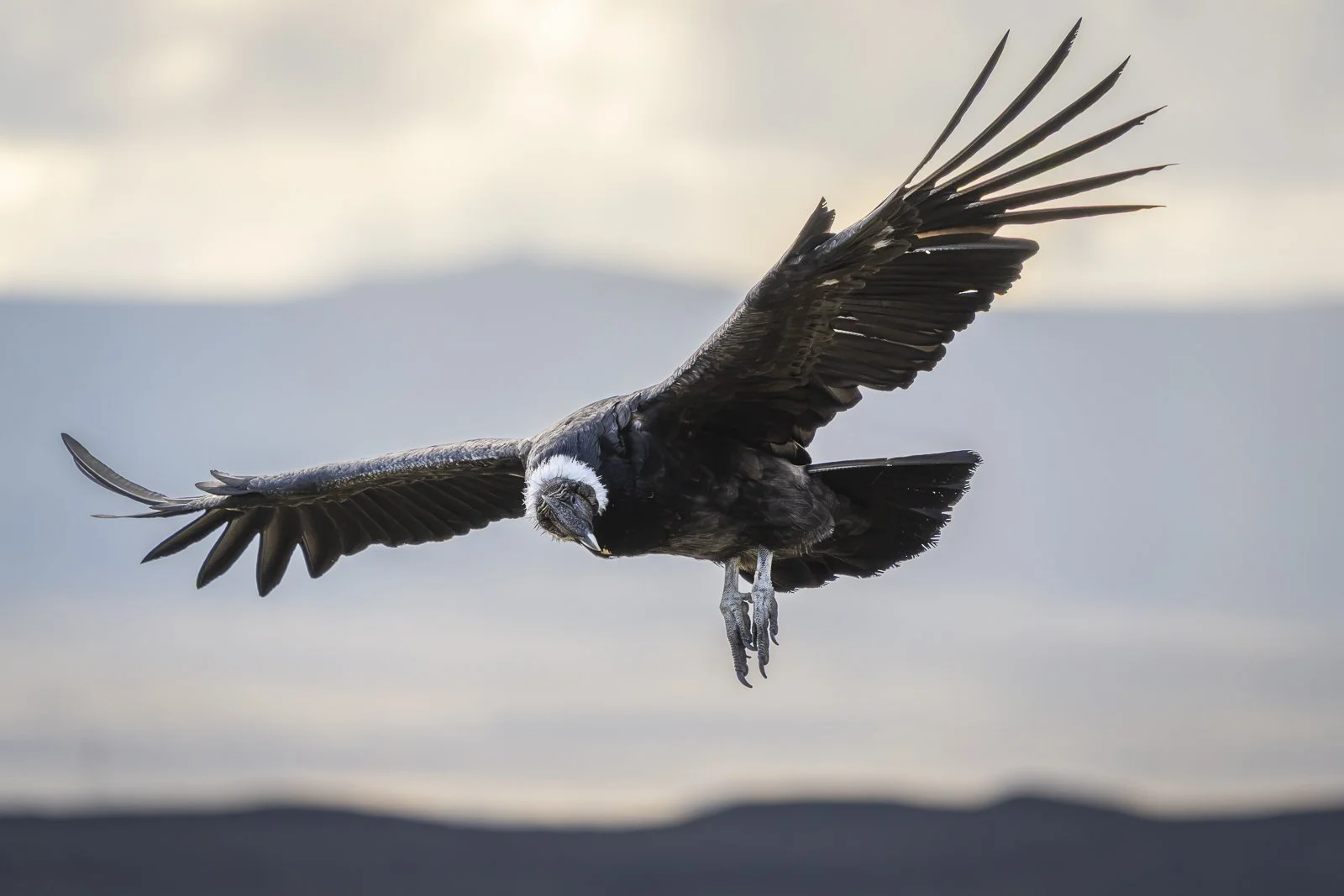
One of the encounters I had hoped for: an Andean condor flying at eye level, with the Patagonian landscape fading softly into the distance.